
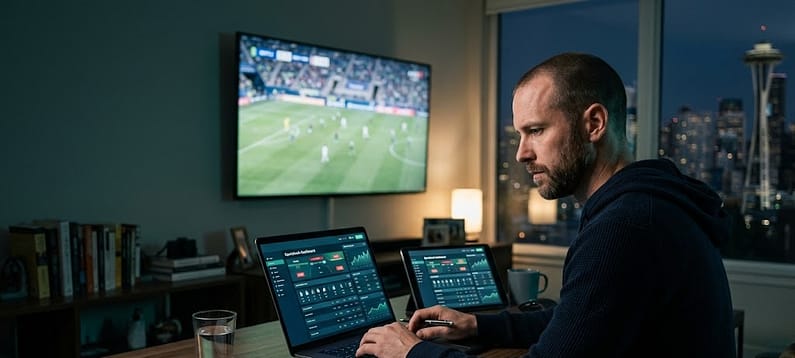
The United States meeting Belgium in the 2026 FIFA World Cup Round of 16 is more than a major soccer moment for American fans. It is also the type of event that tests how useful a sportsbook becomes once the match starts. A knockout game at Seattle Stadium, with a quarterfinal place attached and millions of eyes on the host nation, creates pressure across pregame markets, live betting menus, player props, settlement rules, and responsible betting tools.
For U.S. bettors comparing regulated books, offshore sportsbooks, and prediction-style markets, USA-Belgium is a reminder that the headline match line is only one part of the decision. The deeper question is whether a platform can handle real-time information, lineup changes, tactical shifts, market pauses, and user protections without turning a high-stakes event into a confusing betting screen.
Why USA-Belgium Became A Live Market Test
The official FIFA match center listed United States vs. Belgium as a Round of 16 fixture at Seattle Stadium, with kickoff scheduled for July 6, 2026, at 5 p.m. local time in Seattle. That timing matters for U.S. betting audiences because it places the match in a prime evening window on the East Coast, after several days of knockout-stage results had already shaped public expectations for the tournament.
The matchup also carried a familiar World Cup storyline. Belgium knocked the United States out of the 2014 tournament in extra time, a match remembered by many American fans for Tim Howard’s historic save total and the U.S. late push after Julian Green’s goal. In 2026, the setting is different. The United States is hosting, Mauricio Pochettino is leading the USMNT, and the match arrives during a tournament where American soccer attention is unusually concentrated.
That type of attention changes sportsbook behavior. Pregame markets can attract early volume, but knockout soccer often becomes more dynamic after kickoff. A cautious first 20 minutes, an early card, a goalkeeper injury, a tactical substitution, or a shift from pressing to counterattacking can alter the way live totals, next-goal markets, corner markets, player shots, and same-game-style props are priced.
That is why live market depth matters. A sportsbook with only a basic match winner and total may feel limited once the game begins. A deeper platform can give bettors more ways to compare market structure without forcing them into one narrow betting angle. That same comparison mindset is covered in YouCanBetOnIt’s guide to World Cup live betting strategy, where the focus is on timing, discipline, and reading market movement rather than chasing every in-play swing.
How Lineup News Can Reshape Betting Screens Before Kickoff
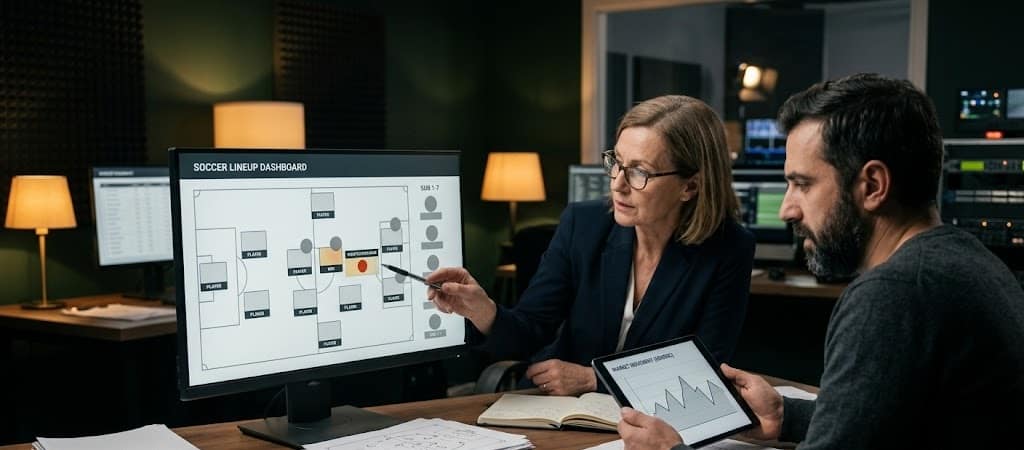
The Folarin Balogun storyline showed why player availability can become a sportsbook stress test before a major match. FIFA’s own USA-Belgium preview and match content referenced Balogun’s status as one of the key storylines around the game, while U.S. and international coverage followed the suspension debate closely. For bettors, the lesson is not that one player should decide a wager. The lesson is that live and pregame markets need to absorb new information clearly.
Balogun had already been one of the United States’ most important attacking players in the tournament. His movement, finishing, and ability to occupy center backs affect more than a basic win probability. They can influence shots markets, anytime scoring markets, team totals, assist markets for Christian Pulisic or Weston McKennie, and how Belgium manages its defensive line.
Belgium’s side brings its own market complications. Kevin De Bruyne, Romelu Lukaku, Youri Tielemans, Jérémy Doku, and Leandro Trossard can all change the rhythm of a match in different ways. If Belgium dominates possession, live corners and shots may become more active. If the United States presses successfully, counterattack-related markets and transition chances may become more relevant.
This is where bettors should separate information from noise. A player update does not create a guaranteed edge. It simply changes the questions a bettor should ask. Has the sportsbook adjusted quickly? Are player props still available? Are markets paused too often? Are settlement rules clear if a player does not start? Does the platform clearly explain whether extra time counts for a specific market?
Those details are more useful than trying to react emotionally to every lineup rumor. For broader fan and bettor discussion around high-profile U.S. soccer events, a resource such as online casino discussion can fit naturally into the research process, especially when readers want to see how market narratives develop before kickoff. The safer approach is still to verify rules and prices directly with the operator before relying on any market.
Why Knockout Soccer Creates More In-Play Volatility
Live betting in soccer is different from live betting in sports with frequent scoring. A goal can change the entire market structure, but long stretches without goals can also create meaningful movement. In a knockout match, the scoreline interacts with time, substitutions, fatigue, cards, and extra-time risk.
For USA-Belgium, the match format matters because a draw after 90 minutes would not end the contest. Extra time and penalties are part of the tournament pathway, yet many sportsbook markets settle at the end of regulation unless the rules say otherwise. That distinction can be easy to miss during a high-attention match. A bettor looking at “to advance” is reviewing a different market from “three-way moneyline” or “90-minute result.”
Live totals can also shift quickly. A 0-0 match after 30 minutes may lower goal expectations, but that does not always mean the match has become quiet. A game with blocked shots, dangerous counters, and aggressive fullbacks can still carry attacking pressure even if the scoreboard remains unchanged. The useful sportsbook is the one that lets users compare multiple signals instead of relying only on the main total.
The same applies to props. Player shots, assists, cards, corners, saves, and team-specific markets may become more relevant than the match winner during certain phases. If Belgium controls possession through De Bruyne and Doku, wide-area markets may matter. If the United States builds through Pulisic and Balogun, shot quality and defensive recovery speed may become more important.
A deeper live menu does not make betting safer by itself. It simply gives responsible bettors more comparison points. The risk is that more markets can also create more temptation to overtrade. That is why platform design, limit tools, market clarity, and clear settlement language should be part of the review, especially during a match carrying national emotion.
What U.S. Bettors Should Compare Beyond The Main Line
USA-Belgium is the type of match where bettors may be tempted to focus only on the winner. That is understandable, but it is too narrow for evaluating sportsbooks. A better comparison looks at how each platform handles the full event cycle: pregame, lineups, first half, halftime, second half, extra time, and post-match settlement.
| Comparison Area | Why It Matters During USA-Belgium | What Bettors Should Review |
|---|---|---|
| Live Market Depth | Knockout matches can shift after cards, substitutions, or tactical changes | Props, totals, corners, cards, team markets, and “to advance” markets |
| Market Rules | Soccer settlement can differ between 90 minutes, extra time, and penalties | Whether the market includes regulation only or full match advancement |
| Platform Stability | High-volume U.S. matches can test apps and trading systems | Loading speed, market pauses, bet confirmation clarity, and account access |
| Responsible Tools | Emotional national-team matches can encourage impulsive decisions | Deposit limits, time reminders, cooling-off tools, and self-exclusion options |
The key is not to find the longest menu for its own sake. A long menu with unclear rules can be worse than a shorter menu with transparent terms. Sportsbooks and offshore platforms may differ in how they define soccer markets, how quickly they settle props, and how they handle suspended or postponed markets. Users should review those terms before kickoff, not while the match is moving.
Prediction-style markets add another layer. Some platforms frame sports outcomes through event contracts rather than traditional sportsbook language. That can create a different user experience, especially around liquidity, trading volume, and market exits. Before using any platform, readers should understand whether they are looking at a licensed sportsbook, an offshore sportsbook, or a prediction-market product with a separate regulatory structure.
How Seattle’s Stage Raises The Volume Test
Seattle adds a useful event-market angle because the city has been one of the major U.S. host locations for the 2026 World Cup. The local organizing effort, stadium environment, fan activity, and national broadcast window all contribute to a bigger betting audience than a neutral midweek international match would normally attract.

That scale matters for operators. Major World Cup matches can stress customer service, geolocation checks, account verification, payment processing, app performance, and risk systems. Bettors usually notice only the front-end markets, but the quality of the experience depends on the back-end systems working smoothly under pressure.
For live betting, that pressure is even sharper. If a sportsbook delays markets after every attack, users may feel the menu is technically available but practically limited. If markets remain open with unclear price changes, users may not understand what they are accepting. If app performance slows during peak moments, the platform becomes less useful right when the match is most active.
The best comparison is practical. Bettors should ask whether the app is readable, whether market categories are easy to find, whether bet confirmation screens are clear, whether account tools remain accessible, and whether responsible gambling controls are visible. The National Council on Problem Gambling’s responsible gambling resources are a useful reference point for why limits, informed decision-making, and player protection should be treated as part of the product, not a separate afterthought.
Why Offshore Sportsbook Comparison Needs Extra Caution
YouCanBetOnIt.com’s audience includes readers comparing offshore sportsbook options around major events, but USA-Belgium also shows why offshore analysis needs careful language. Offshore platforms may offer different market depth, different props, different payment options, and different rules than U.S.-regulated sportsbooks. That does not mean they are automatically better, safer, or available to every user.
Jurisdiction matters. Betting laws and platform access depend on where a person is located, which operator they use, and what regulatory framework applies. Readers should not assume that a sportsbook is available or appropriate simply because it posts World Cup markets. They should review terms, market rules, withdrawal policies, identity requirements, responsible gambling tools, and customer support procedures before creating an account or placing a wager.
Offshore comparison is most useful when it focuses on structure rather than hype. Does the platform list soccer rules clearly? Does it explain extra-time settlement? Does it separate player props from team props? Does it post market suspension rules? Does it provide account security features? Does it offer responsible gambling tools that users can actually find?
USA-Belgium is an ideal case study because a single match can expose all of those areas. A bettor may not notice weak rules on a quiet group-stage game. A knockout match with lineup drama, heavy volume, and potential extra time makes platform weaknesses easier to see.
Why Responsible Comparison Matters More Than Match Hype
The United States against Belgium is exactly the type of World Cup match that can push bettors toward emotional decisions. It has national stakes, familiar history, star players, a prime-time U.S. audience, and a direct path to the quarterfinals. That makes it valuable for sportsbook analysis, but it also makes responsible betting discipline more important.
Live market depth should help users compare timing, pricing, and rules. It should not be treated as a reason to place more bets during every phase of the match. More available markets can mean more information, but they can also increase the risk of impulsive decisions if the bettor is reacting to stress, national loyalty, or frustration after a missed chance.
The better approach is to decide what matters before kickoff. Review the match format. Understand which markets include extra time. Check whether player props require a player to start. Confirm whether cashout or trading features are available. Review deposit limits and time controls. Compare the sportsbook’s rules before the first whistle, not after the first major incident.
USA-Belgium may be remembered for what happens on the field in Seattle. For bettors, it should also be remembered as a clear example of why sportsbook quality is measured during the match, not just before it. The strongest platforms are not the ones with the loudest event promotion. They are the ones that make live markets understandable, rules visible, and responsible tools accessible when the betting audience is paying close attention.