
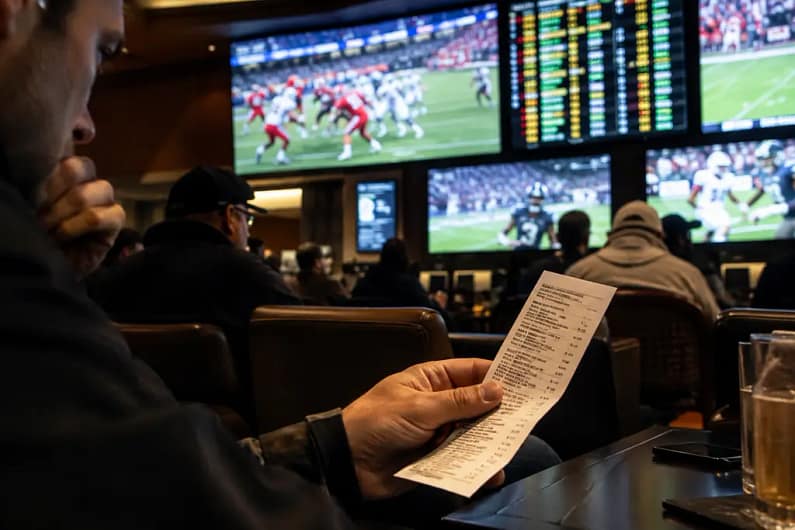
Prediction Markets have become a measurable pressure point for traditional NFL sportsbook handle as of October 31, 2026, but the data does not support a simple story of one product replacing the other. The more useful read is behavioral: some wagering volume has shifted, some users appear to be comparing both products, and regulated sportsbooks are being forced to think harder about access, pricing, and market depth before the NFL season reaches its midpoint.
The American Gaming Association said on September 4, 2026, that legal, regulated sportsbook handle for the 2026 NFL season was projected at $29.5 billion, almost flat against $29.4 billion in 2025, and it tied that stall in part to sports event contracts outside the traditional sportsbook model AGA handle estimate. Flat growth is not collapse. Still, it matters because NFL betting has often been the clearest growth signal for U.S. sportsbooks.
From a bettor psychology angle, the key question is not only where money goes. It is why users move between formats. A sportsbook presents familiar moneylines, spreads, totals, parlays, and props. Event-contract platforms present a market-style interface where price, liquidity, and trade timing feel different. That can change how people perceive control, risk, and value, even when the underlying event is the same NFL game.
Prediction Markets and NFL Handle Signals
September Handle Baseline
The AGA projection is the cleanest starting point because it frames the issue at the legal, regulated sportsbook level. A $29.5 billion projection versus $29.4 billion a year earlier suggests the core NFL product remained large, but growth had stalled. For operators, that is a meaningful change in slope. A flat market can still produce strong revenue for the largest brands, yet it gives smaller books less room to absorb promotional cost, tax pressure, and acquisition spending.
The handle number also tells us what not to assume. A flat projection does not prove that every dollar missing from sportsbook growth went to event contracts. NFL betting behavior is affected by state maturity, user acquisition cycles, promotions, media partnerships, app retention, game scheduling, and household budget pressure. Treating one variable as the full explanation would be a weak model.
Why Flat Growth Matters
In a mature betting market, a flat NFL handle forecast can be more important than a short-term spike in app signups. Handle is not revenue, and it is not profit. It is the total amount wagered, so it can rise while operator margins fall or flatten while customer value improves. Still, sportsbooks track handle because it signals engagement, market share, and product relevance.
The NFL remains the sport that concentrates casual, recreational, and high-frequency bettors into the same weekly cycle. If event-contract platforms pull attention during that cycle, sportsbooks may face pressure in the exact period they count on for cross-sell, retention, and promotional payback. That does not mean bettors gain an automatic edge. It means comparison behavior becomes more common, and comparison behavior can make brand loyalty weaker.
How Substitution Shows Up in the Data
Prediction Markets as a Substitute, Not a Mirror
Prediction Markets do not settle, display, or feel exactly like sportsbook wagers, so handle comparisons require caution. A sportsbook bet is measured as a wager. A contract platform may report trading volume or notional activity, which can reflect repeated buying and selling rather than a single bet held through the final whistle. That is why analysts often debate how much of this activity is true sportsbook substitution and how much is parallel financial-style trading around sports outcomes.
Citizens Equity Research estimated that only about 4% of regulated sportsbook handle had permanently shifted to prediction-market exchanges, while customers using both products increased sportsbook wallet size by about 27% in the six months after adopting those exchanges Action Network analysis. That combination is important. It suggests cannibalization exists, but it may be concentrated among certain users rather than broad enough to explain every slowdown in sportsbook growth.
Dual-Product Users Complicate Cannibalization
The dual-user finding cuts against a common fear: that every contract trade is a dollar permanently lost by sportsbooks. Some users may open a contract app for a different price format, then still place traditional wagers elsewhere. Others may use the contract market as a sentiment gauge before deciding whether to play a sportsbook market. That behavior can raise total engagement while still pressuring margins and acquisition strategy.
For sportsbooks, the concern is not just lost handle. It is loss of the first screen. If a bettor checks a contract market before opening a sportsbook, the sportsbook is no longer the default pricing reference. That has a psychological cost. The first price a user sees often becomes the anchor, even if they later compare it with a spread, moneyline, or total.
Behavioral Signals Behind Prediction Markets Demand
Control, Liquidity, and Price Anchoring
Prediction Markets may appeal to users who like the idea of entering and exiting positions rather than waiting for a standard bet to settle. That does not reduce risk. It changes the user’s perception of risk. A tradeable position can make losses feel manageable until liquidity thins, fees matter, or the market moves sharply against the user.
Sportsbook bettors are also prone to familiar cognitive errors: chasing a price after movement, overreacting to injury news, overweighting prime-time narratives, and confusing volume with accuracy. Contract markets can amplify those behaviors because a moving price looks like a live consensus signal. Sometimes it is. Sometimes it is a thin market reacting to a small burst of activity.
Age Access and Regulatory Friction
The AGA also raised concern about younger users, including reported volume from ages 18 to 20 on Kalshi, despite that age group being below the legal sports betting age in many legal sports betting states. That point matters less as a headline and more as a regulatory stress test. If two products create similar economic exposure to NFL outcomes but follow different access rules, state regulators and operators will keep pushing for clearer treatment.
Regulated sportsbooks operate under state-by-state rules, tax structures, responsible gambling controls, and age verification standards. Event-contract platforms are part of a different debate. For analysts, the key is not to assume the products are identical. It is to ask whether users treat them as substitutes during the same NFL decision window.
Market Comparison for NFL Bettors

Depth Before Price
Price comparison is useful only if the market is deep enough to support the stake size and timing a user expects. A displayed price can be less meaningful if available size is thin, if fees change the effective cost, or if execution differs from what the user assumed. Sportsbooks can have their own limits and rules, but the experience is more familiar to most bettors: odds are posted, the wager is accepted or rejected, and settlement follows house rules.
That is why responsible comparison starts with structure, not opinion. What is the quoted price? What is the cost after fees or spread? Can the user exit, and at what likely price? What account protections apply? What state or federal rules govern the product? These questions should come before any view on an NFL side, total, or player prop.
Operator Response and Product Design
Traditional sportsbooks are unlikely to ignore this pressure. Some may respond through sharper pricing displays, broader prop menus, improved live-betting interfaces, or their own adjacent event-contract products. Earlier coverage of sportsbook model pressure reached a similar point: the competition is not only about who offers a market, but who becomes the trusted place to evaluate it.
For operators, the technical layer behind price display, account rules, and market menus sits close to resources such as sportsbook software. That infrastructure does not solve the demand shift by itself, but it shapes how quickly a sportsbook can test product changes, manage risk, and present markets in a way that users understand.
- Do not compare headline volume one-for-one: sportsbook handle and contract notional activity can measure different behaviors.
- Check rules before price: access, fees, settlement, and market depth can matter as much as the displayed number.
- Watch anchoring bias: the first price seen can distort later judgment across books and exchanges.
- Separate interest from value: high activity around an NFL game does not prove a favorable wager exists.
NFL Handle Pressure From Prediction Markets
The midpoint read is balanced. Traditional NFL sportsbook handle remains enormous, and the AGA projection did not point to a collapse. Yet the lack of growth against 2025 is a warning signal because NFL demand has been the engine for regulated books. Contract-style sports markets are now large enough to affect attention, comparison habits, and possibly wallet allocation.
The most evidence-based position is that substitution is real but uneven. A small share of handle appears to have shifted permanently, while dual-product users may still spend more with sportsbooks after they adopt the newer format. That creates a mixed incentive for operators: defend core sportsbook handle, but study why users are attracted to market-style pricing in the first place.
For bettors, the cautious approach is not to treat either format as safer or smarter by default. The same psychological traps remain: overconfidence, recency bias, fear of missing a move, and the belief that more screens equal better decisions. NFL markets are deep, fast, and emotionally charged. Better analysis starts with definitions, rules, and price context before any stake enters the picture.