
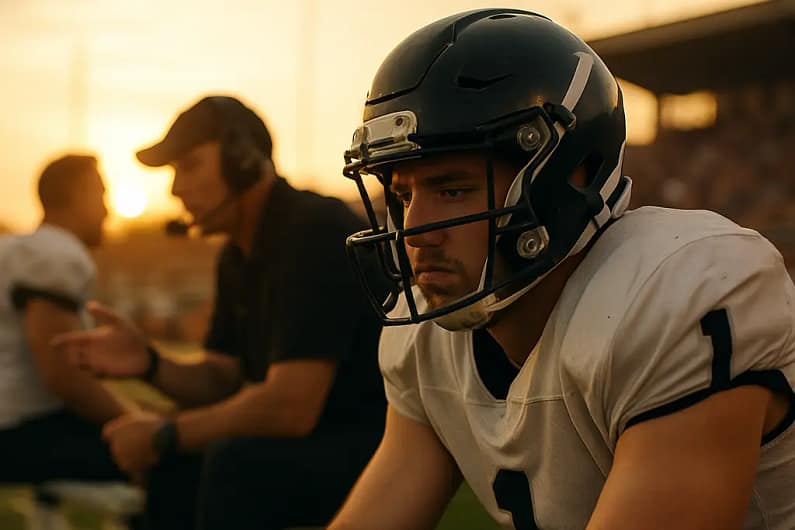
Player safety betting is now a pricing issue, not just a policy story. As of October 17, 2026, recent health-and-safety rules have affected availability risk, prop-market depth, in-game reaction speed, and the way operators handle markets tied to individual athletes. I am not using this as a prediction angle or a prompt to wager. The better frame is risk control: what information changed, which markets became more fragile, and where bettor psychology can push prices away from measured analysis.
The most visible shift has been in football, where discipline and injury protocols can move team spreads, totals, and player props without any change in underlying team quality. A bettor who treats every rule change as a betting signal can overreact. A bettor who ignores those rules can miss why an operator shortens limits, pulls props, or delays reposting a market after injury news.
This analysis relies only on the research record supplied for this topic and cites the available high-authority sources where permitted. It does not include live odds because no current operator prices were provided. Any listed sportsbook number would need to be operator-sourced and time-stamped because prices can move before kickoff, first pitch, or tipoff.
Player Safety Betting Starts With Availability Risk
Player Safety Betting And NFL Discipline
The clearest NFL example came on August 26, 2026, when the NFL and NFLPA announced a discipline order for violations of five emphasized health-and-safety rules. The covered categories included hip-drop tackles and blindside blocks, and the structure stated that three offenses in any of those categories would result in a one-game suspension, according to the NFL-NFLPA discipline order.
For markets, the effect is not that every defender becomes a weekly suspension risk. That would be too broad. The practical impact is narrower: players with repeated flagged techniques can become more sensitive inputs in availability models. If a starter approaches a suspension threshold, operators may shade team markets or hold off on deeper player props until status is clearer. The same issue can affect derivative markets, especially if a defensive absence changes pressure rate assumptions, rushing efficiency expectations, or matchup depth.
That is where bettor psychology matters. Many bettors react to a suspension headline as if it carries the same weight across all positions and schemes. It does not. A one-game absence for a rotational player is not the same as losing a high-snap defender in a matchup where that player’s role is central. A disciplined market comparison asks what the player actually does, how replaceable the role is, and whether the sportsbook has already adjusted.
Concussion Protocols And Market Timing
In September 2026, the NFLPA approved updates to the concussion protocol after the Tua Tagovailoa incident on September 25, 2026. The cited change focused on preventing players who display gross motor instability from returning to play, with NFL sign-off identified as the next step in the NFL concussion protocol report.
From a betting-market view, this affects timing more than it affects long-term ratings. If a quarterback, receiver, or high-usage running back leaves a game under a head-injury review, live markets can move before the public understands whether the player may return. Books may suspend markets, reopen them with wider margins, or reduce prop availability. That sequence is especially relevant for player safety betting because it shows how rule interpretation can become part of price formation.
The cautious response is not to chase every live move. Injury uncertainty often produces emotional trading. Some bettors anchor to the pregame number. Others overstate the effect of a star’s absence without accounting for score state, opponent, or play-calling changes. The stronger process is to separate confirmed status from speculation and avoid treating social-media clips as medical certainty.
Prop Restrictions Change Market Depth
College Player Props And Harassment Pressure
The research record states that on January 15, 2026, the NCAA urged state regulators to eliminate player-specific prop bets in college sports, citing athlete harassment, insider-information solicitation, and spot-fixing risk. It also notes a March 25, 2026 NCAA survey in which nearly 60% of college basketball players said betting had led to unfair scrutiny, while 74% of women’s players and 65% of men’s players agreed that betting-related harassment weakened trust between fans and athletes.
For sportsbooks, the market effect is direct: fewer player-specific college props in some jurisdictions, less uniform liquidity across states, and more emphasis on team-based outcomes. The same matchup can therefore present different legal menus depending on state rules. That can frustrate bettors who compare apps across borders, but it is a predictable outcome when regulators weigh market access against athlete protection.
For bettor behavior, restrictions can reduce impulse betting on individual college athletes. That may lower some harassment-linked pressure, though the research does not prove how much volume moved from player props to other markets. The uncertainty matters. A careful analyst should not claim that every restriction reduced harm by a measurable amount unless the data supports that claim.
MLB Micro Markets And Integrity Controls
The supplied research states that MLB and sportsbook partners placed limits on pitch-level markets effective November 10, 2025, including a maximum $200 stake on pitch-level bets such as ball-strike calls or pitch velocity and removing those markets from parlays. That type of market design is less about predicting game winners and more about limiting the payoff attached to highly granular events.
Micro markets can appeal to bettors because they offer fast feedback. That same speed can weaken judgment. A pitch-by-pitch menu encourages frequent decisions, short memory, and recency bias. If a bettor just watched two missed locations, the next pitch market can feel clearer than it is. Limits and parlay exclusions reduce the reward for trying to isolate tiny events that may be more exposed to integrity concerns.
This is also where operator comparison becomes useful without turning into odds chasing. Bettors can compare which markets are offered, which are restricted, and which are unavailable in their state. For a related pricing frame, the site’s player prop pricing analysis shows why margin checks and operator comparison matter before reacting to any prop menu.
How Safety Rules Affect Live Betting
Kickoffs, Field Position, And Totals
The research record says that in Week 1 of the 2025 NFL season, 75.6% of kickoffs were returned, the highest Week 1 rate since 2010, while concussion rates on returns dropped by about 43%. Those two facts matter together. A safety-oriented rule can still change game texture. More returns can influence average starting field position, special-teams props, and totals models, even when the rule’s safety aim is separate from betting.
The mistake is to assume a rule change creates a simple over or under angle. Field position depends on coverage quality, return decisions, penalties, weather, and game script. Operators adjust once data accumulates. Early in a rule cycle, bettors may disagree about sample size, but disagreement is not the same as value. The strongest player safety betting process is to ask whether the market has enough post-rule data and whether the available price reflects that sample.
Injury News And Overreaction Risk
The research also states that by mid-2026, injury announcements involving quarterbacks and star players were causing swift movement in spreads, moneylines, totals, and especially props. That is believable as market behavior, but the safe analytical stance is to avoid assuming every fast move is correct or incorrect. Speed alone is not accuracy.
Sportsbooks may move because they receive confirmed information, because risk teams are reducing exposure, or because public demand has become one-sided. Bettors often read every move as sharp information. That can be a cognitive trap. A market that moves quickly after a player is listed questionable may still move again after official inactive lists, warmups, or coach comments.
- Separate confirmed league or team information from rumor-driven updates.
- Compare whether the move is larger in player props than in team markets.
- Check whether the player’s role affects volume, efficiency, or both.
- Avoid increasing stake size simply because a market moved fast.
Eyewitness News TV, available at this site, offers broader sports coverage within the same network, providing a useful related news stop. However, betting decisions still require verified market data and jurisdiction-specific rules.
Jurisdiction Gaps And Responsible Market Comparison

State Rules Create Uneven Menus
The research record notes that in early 2026, Missouri rejected the NCAA’s request to ban college player prop bets, while Louisiana, Maryland, Ohio, and Vermont had enacted such bans by then. That split matters because the same sport can have different legal betting menus across states. A bettor in one state may see individual college props, while another may only see team markets.
That fragmentation can affect liquidity and pricing. A market with fewer legal outlets may be thinner. A market with wider access may attract more public volume. None of that means bettors should try to bypass state rules. Legal access, operator accountability, and responsible tools are part of the market structure. Offshore or noncompliant alternatives can reduce protections and create withdrawal, dispute, and responsible-gambling risks.
Accountability For Harassment
The research states that five major leagues asked for rules that would permanently revoke wagering privileges for people found to have harassed or threatened athletes or staff. That proposal fits the broader direction of 2026 policy: player safety is no longer limited to equipment, tackling technique, or medical review. It also includes conduct around betting markets.
This matters for operators because account access is a market-control tool. It also matters for bettors because anger after a lost prop is not just poor discipline; it can become a regulatory and ethical issue. A data-driven wagering process should reduce emotional attachment to individual outcomes. If a single missed rebound, strike call, or player substitution creates rage, the problem is not the athlete. It is the bettor’s risk process.
Player Safety Betting Discipline In 2026
Player safety betting in 2026 is best understood as a filter for market risk. NFL discipline rules can affect availability. Concussion protocols can change live-market timing. College prop restrictions can reduce market depth. MLB pitch-level limits can reduce exposure to high-frequency micro events. State-by-state rules can make the same event look different across regulated apps.
The practical response is conservative. Do not invent odds. Do not treat injuries as entertainment. Do not assume that faster information means cleaner information. Compare regulated operators where legal, track how rules affect market menus, and respect that health-and-safety policies exist for reasons outside betting. Prices are only one layer of the story.
My preferred checklist is simple: verify the rule, verify the athlete’s status, identify which markets are most exposed, check whether the operator has already adjusted, and decide whether passing is the strongest decision. In many cases, it will be. That restraint is not passive. It is how disciplined bettors avoid turning player protection news into emotional action.