

Welcome to the world of mixed martial arts betting. It’s like a political campaign, full of choices. At first, the different bets might confuse you. But don’t worry, I’m here to help.
The most common bet is the moneyline. It’s like picking a winner. For example, Islam Makhachev is the favorite at -340 against Ian Machado Garry at +270. The minus sign means you need to bet more to win less. The plus sign means you bet less to win more.
Round totals add excitement. You guess if the fight will end early (Under 2.5 rounds) or go long (Over). Betting on how a fight will end, like a knockout, is risky but rewarding. And parlays are like coalitions—fragile but worth it if they win.
As you explore this world, think like an analyst. Records can be tricky, and fighting styles matter a lot. So, get ready for the exciting world of MMA betting!
Fighter and Style Analysis
Understanding each fighter’s style is key in fight analysis. It’s like analyzing a political debate. A fighter’s stance, movement, and strikes show their strategy. For example, an orthodox fighter facing a southpaw is like a politician facing an unexpected opponent.
Conor McGregor’s straight left hand was a game-changer. It caught orthodox opponents off guard. His reach advantage helped him control the fight, like a skilled debater.
But numbers don’t tell everything. It’s important to see if a fighter uses their reach well or prefers to fight close. Weight cuts also play a big role. A bad weight cut can make a fighter slow and weak, like a tired politician.
A fighter who rehydrates well after the weigh-in has an advantage. They can quickly gain support, like a politician after a tough debate. Watch the weigh-ins closely; a tired fighter often loses.
The quality of a fighter’s opponents matters too. A 15-0 record might look good, but it could be against weak opponents. A 12-5 fighter who has faced top opponents is more valuable. It’s like comparing a senator who only passes simple bills to one who has fought hard battles.
The idea of “MMA Math” is a myth. Just because Fighter A beat B, and B beat C, doesn’t mean A will beat C. Many factors, like style and injuries, matter. Real analysis involves watching how fighters react under pressure.
In conclusion, good fight analysis looks at many things. It includes stance, reach, weight, and fight history. By understanding these, you can make better bets. So, whether you’re betting for fun or seriously, pay attention to the details.
For more on fighter styles, check out this detailed guide. For betting strategies, visit You Can Bet On It.
Understanding Betting Odds and Markets
Betting odds can seem like a puzzle, but once you get it, it changes everything. They show who the favorites are and what the crowd thinks. Favorites have a minus sign (e.g., -200), and underdogs have a plus (e.g., +150). This tells you how much you need to bet to win $100 or how much you’ll get from a $100 bet.
Implied probability is key in these odds. A -200 favorite means they have a 67% chance of winning. But, a +150 underdog has a 40% chance. Remember, these numbers are guides, not guarantees. Just because a fighter is favored doesn’t mean they’ll win.
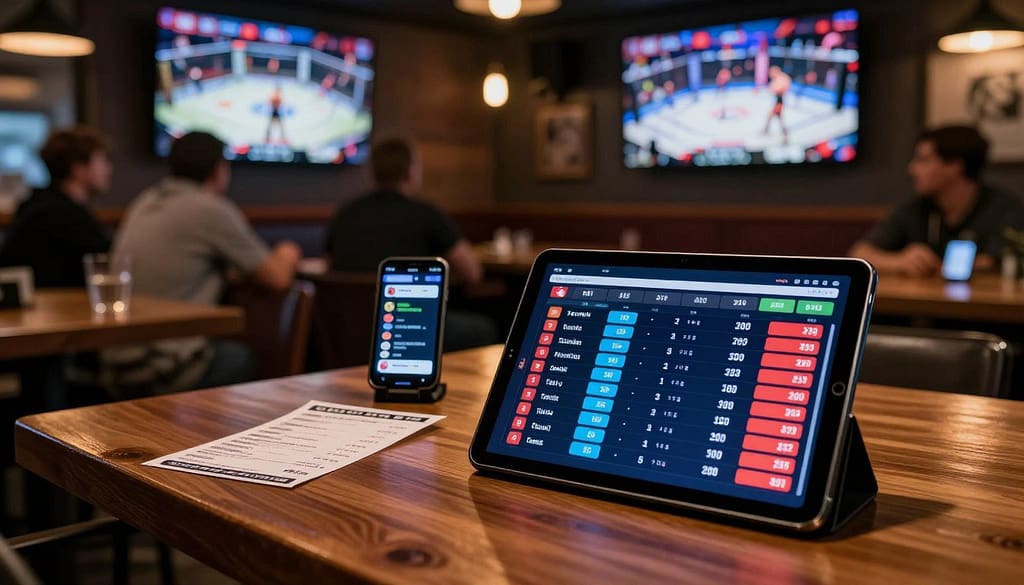
Round totals add excitement. A line of 1.5 rounds predicts the fight’s length. Heavyweights often end fights quickly, while lighter fighters might make it longer. Betting on the fight’s end, like a knockout or submission, offers higher payouts because it’s more specific.
Parlays mix different bets for a bigger win, but fail one bet and you lose everything. I’ve seen people bet on three underdogs hoping for a big win. It’s a risky but rewarding strategy.
Live betting is thrilling. You can bet during the fight, and odds change with each round. If a favorite starts slow but usually comes back strong, their odds might look good. This is your chance to bet on a comeback.
Line shopping is smart. By comparing odds at FanDuel, DraftKings, and BetMGM, you can find better deals. For example, if Anthony Smith is +400 at one site and +365 at another, that’s a big difference. Why not get the best deal?
Don’t forget the vig, or juice, which is the sportsbook’s commission. It’s often shown in odds like -105 for both sides of a round total. It’s a small tax on your bets, and knowing it helps you make better choices.
| Bet Type | Description | Example Odds | Implied Probability |
|---|---|---|---|
| Favorite | Betting on the more likely winner | -200 | 67% |
| Underdog | Betting on the less likely winner | +150 | 40% |
| Round Total | Wagering on the fight’s duration | 1.5 rounds | Varies |
| Method of Victory | Betting on how the fight ends | KO, Submission, Decision | Higher payouts |
| Parlay | Combining multiple bets | Varies | High risk |
In conclusion, understanding betting odds is more about reading the story they tell. They show what people think, but remember, they’re not always right. So, whether you’re new or experienced, learning the odds is key to making smart bets.
Advanced Metrics for Winning Strategies
In MMA betting, advanced metrics are key. They give you deep insights, helping you make smart choices. Think of them as a backstage pass to the fight world, showing you what really matters.
When looking at fighters, focus on stats like strikes landed per minute and strikes absorbed per minute. Also, check takedown accuracy and significant strike differential. Sites like UFCStats.com have all these metrics. For example, a fighter with a high striking rate but poor takedown defense might struggle against a grappler.
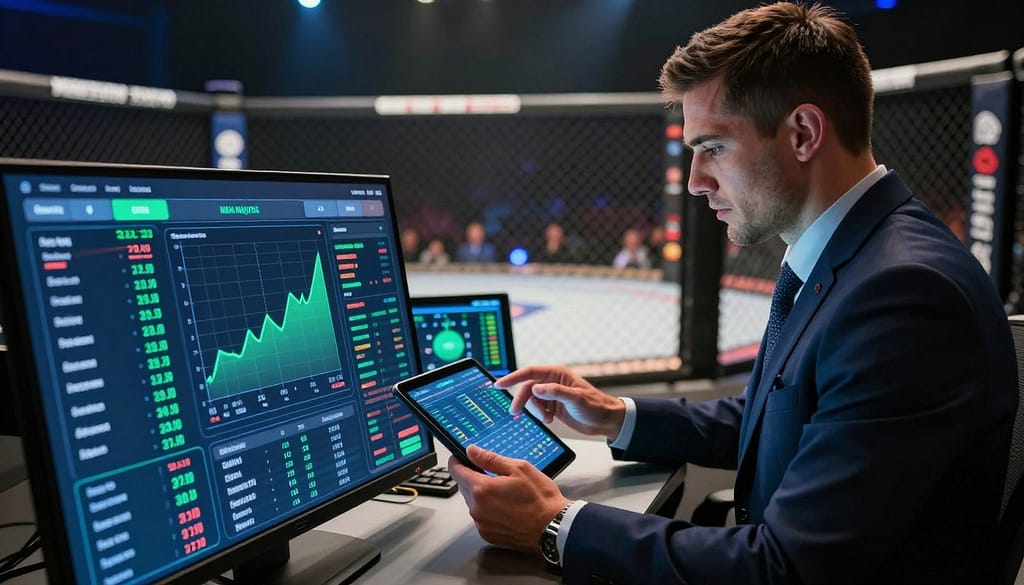
But don’t just look at records. Think about how styles match up. A knockout artist might seem unbeatable, but a defensive fighter could neutralize their power. Advanced analytics help you see this.
It’s also important to track your bets. Tools like Betstamp can help you see your return on investment (ROI). Set a unit size, like 1-2% of your bankroll, and stick to it. Chasing losses is like a losing campaign; it rarely works out.
In 2024, favorites won 72% of UFC fights. But public opinion can make lines too high. Consider factors like ring rust and injuries. Watching weigh-ins can also give you clues about weight-cut struggles.
Live betting is another good option. If a favorite is down in the first round but adjusts well, you might get them at good odds. It’s like buying low on a candidate after a bad debate; it can pay off.
Advanced metrics are about finding the gap between what people think and what’s real. By using these insights, you can bet on MMA like a pro.
| Metric | Importance | Example |
|---|---|---|
| Strikes Landed/Minute | Indicates offensive output | High-volume strikers |
| Takedown Accuracy | Shows grappling effectiveness | Wrestlers vs. strikers |
| Significant Strike Differential | Measures overall fight control | Dominant fighters |
Case Studies and Expert Tips
Let’s explore a real scenario that’s as exciting as a season finale: Islam Makhachev versus Ian Machado Garry. Makhachev is the favorite at -340. He’s known for his grappling skills and impressive record. On the other hand, Garry is a rising star with a win over Belal Muhammad.
This fight is a clash between a grappler and a striker. It’s perfect for analysis. Makhachev’s move to welterweight is interesting. Will his strength work, or will he struggle?
Watch the weigh-ins closely. If Makhachev looks tired, Garry’s chances might improve. Betting on Garry to win by decision could be smart. Makhachev has never been knocked out in a fight.
Expert tips are invaluable. Look out for fighters who seem off during weigh-ins. Stay away from fighters returning after long breaks or those who’ve had KO losses. Also, don’t ignore the undercard. Fighters like Jose Ochoa at -380 might be overvalued, making the underdog a good choice.
Live betting can give you an edge. If Makhachev has a tough start, his odds might even out. If you know how he adjusts, now’s the time to bet. MMA betting is a mix of strategy and instinct. Every fight is unpredictable. So, analyze well, bet smart, and enjoy the excitement.