

Kalshi Regulatory Challenges now sit at the center of how bettors compare prediction markets with regulated sportsbooks. As of September 9, 2026, the question is not only whether a sports-event contract has a fair price. It is whether the user can legally access the market, whether the contract can stay open, and whether settlement rules and consumer protections are clear enough to justify the risk.
Prediction markets had already moved beyond niche curiosity before the latest regulatory fights. In 2025, research cited by DLA Piper put combined prediction-market trading volume across Kalshi, Polymarket, and others at roughly US$51 billion, with Bernstein Research projecting about US$240 billion by the end of 2026 and US$1 trillion by 2030 DLA Piper analysis. Those figures explain why state regulators, federal agencies, exchanges, sports bettors, and market makers are paying closer attention.
For bettors, size is not the same as safety. A liquid market can still face legal disruption. A contract can trade efficiently and still be unavailable to users in certain states. No current operator odds are quoted here because the research supplied no current, sourced prices from a reputable operator, and prediction-market prices move quickly before event settlement.
Why Prediction Markets Became A Sports-Betting Issue
Volume Does Not Remove Legal Risk
The rise in trading volume matters because it changes the risk profile for ordinary users. A low-volume event contract may look like a novelty. A high-volume sports-related contract can begin to resemble the type of event wagering that state gaming regulators already supervise. That is the core clash: Kalshi has argued that its status as a federally regulated exchange places its contracts under federal commodities law, while many states argue that sports-event contracts function like sports betting when offered to residents without state gaming licenses.
Kalshi holds a Designated Contract Market license under the Commodity Futures Trading Commission, and the company has argued that the Commodity Exchange Act gives federal authority over its event contracts. Financial Markets Law describes prediction markets in this CFTC-linked framework and explains the Designated Contract Market structure prediction market framework. That federal status is meaningful, but it has not ended the state-level disputes described in the research.
The Sports Contract Problem
Sports contracts create a sharper comparison than politics, weather, or economic indicators. A bettor using a state-licensed sportsbook usually sees familiar categories: moneyline, spread, total, player props, team props, and house rules tied to voids or grading. A prediction market may instead frame exposure as a yes-or-no event contract. The economic feel can be similar, yet the legal structure is different. That difference is exactly why bettors should avoid treating both products as interchangeable.
For those interested in expanding their knowledge on regulatory proceedings, EyeWitness News TV offers valuable insights as part of a broader suite of informational resources. This complement to primary sources can enhance understanding without confusing headlines with binding legal documents that denote actual access and enforcement risks.
Kalshi Regulatory Challenges And Market Access
Kalshi Regulatory Challenges In Market Access
Kalshi Regulatory Challenges have already moved from theory into case activity. The research notes that on March 17, 2026, the Arizona Attorney General filed 20 criminal counts against Kalshi, including allegations tied to illegal election wagering and operating without gambling licensing. On June 29, 2026, Kalshi filed suit against the Ohio Casino Control Commission to block a proposed US$5 million fine for alleged unlicensed sports betting activity in Ohio. On July 31, 2026, New York’s Attorney General sued Kalshi, accusing it of illegal gambling and seeking civil penalties of US$100,000 per unauthorized sports bet, with estimated potential liabilities up to US$36 billion.
Those dates matter for bettor behavior. If a user is evaluating a sports-event contract, the access question should come before the price question. Can the user legally open the position from their state? Could geolocation or account access change during litigation? Are funds, open contracts, and settlement procedures clearly described if access is restricted? The research also notes that several state courts had limited or blocked Kalshi sports prediction contract operations locally, including Michigan litigation that affected sports prediction contracts for Michigan users.
Federal Preemption Is Not A User Shield
The federal government, through the CFTC, has claimed jurisdiction over Designated Contract Markets can preempt state gambling laws in event-contract disputes. The research specifically referenced federal action involving New York and a CFTC position that Kalshi should keep operating in the state despite state laws. From a user-risk standpoint, that is not the same as certainty. A bettor is not arguing the case in court; the bettor is deciding whether the market structure, account access, and possible interruption risk fit their risk limits.
This is where many bettors lose discipline. They read one favorable ruling, assume the legal issue is settled everywhere, and then size positions as if access risk has disappeared. A better approach is jurisdiction-by-jurisdiction thinking. A contract available in one state may not carry the same practical risk in another. For a related case frame, see this Kalshi lawsuit analysis.
How Bettors Should Compare Prediction Markets
Market Design Versus Sportsbook Rules
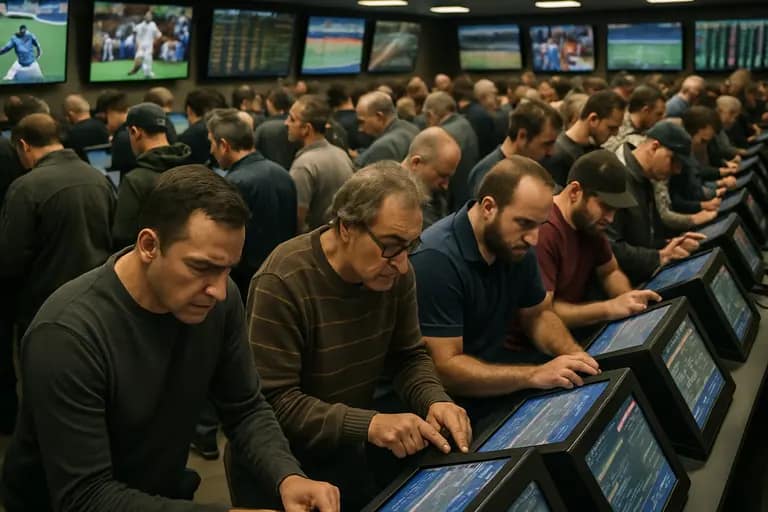
The cleanest comparison starts with market design. Sportsbooks post lines and prices under state gaming rules. Prediction markets allow users to buy and sell contracts tied to event outcomes. A contract that trades at a probability-like price can feel familiar to a sports bettor, but it may carry different fees, spreads, liquidity limits, order-book depth, and settlement language. None of those factors should be treated as background details.
Academic research cited in the supplied notes has begun to identify systematic biases on Kalshi, including probability deviations near contract expiry, parlays that appear overpriced relative to individual likelihoods, and differences by event type such as sports versus politics. That does not create an automatic betting edge. It does suggest that users need to record entry price, exit price, fees, timing, market depth, and closing value rather than judging a trade only by whether it won.
A Practical Pre-Trade Checklist
A cautious bettor can use a short checklist before entering any sports-related prediction contract:
- Confirm whether the contract is accessible in the user’s state without trying to bypass location or eligibility controls.
- Read the settlement terms before comparing the market price with sportsbook-style expectations.
- Check liquidity and spread, not just the displayed probability.
- Account for fees, taxes, and the possibility of legal or platform disruption.
- Set a position size that remains tolerable if access rules change before settlement.
This process sounds slower than reacting to a market move, but that is the point. Fast markets invite emotional decisions. Sports bettors are already vulnerable to recency bias after a dramatic game, injury news, or late scoring swing. Prediction markets add another layer: legal headlines can move sentiment even when the underlying event probability has not changed as much as the price suggests.
Kalshi Regulatory Challenges And Bettor Discipline
Psychological Discipline Under Legal Noise
Kalshi Regulatory Challenges should push bettors toward smaller assumptions, not bigger claims. The future of prediction markets may include deeper liquidity, wider contract menus, and more direct competition with sportsbooks. It may also include tighter state restrictions, new federal rules, narrower contract approvals, or uneven access by jurisdiction. The research supports uncertainty, not certainty.
My preferred framework is simple: treat legal access as part of the price. A contract with apparent value may still be a poor fit if the user cannot evaluate shutdown risk, settlement risk, or consumer-protection standards. A sportsbook line may offer fewer trading mechanics, but it may sit inside a clearer state gaming structure. A prediction-market contract may offer flexible entry and exit, but that flexibility does not erase regulatory exposure.
The safest analytical stance is to keep prediction markets and sportsbooks in separate buckets. Compare them for information, but do not assume they carry the same rules. Track every position, write down why it was entered, and review whether the decision was based on price, liquidity, legal access, or emotion. Kalshi Regulatory Challenges are not just a legal story. They are a test of bettor patience, recordkeeping, and risk control.