

Online sports betting changed how major U.S. markets handled volume through the first half of 2026. The research set for this analysis showed retail handle falling much faster than mobile handle in New York, New Jersey, Illinois, and Ohio. That does not mean every bettor improved their process. It means access, habit formation, and operator choice became more central to discipline. My lens here is cautious: market access can help comparison shopping, but it can also shorten the pause between an idea and a wager.
Online Sports Betting And Retail Drift
The shift away from retail books was not subtle in the 2026 data supplied for this article. In the first half of 2026, retail sports betting handle across New York, New Jersey, Illinois, and Ohio declined 26.7% year over year, while online handle was nearly flat, down only 0.2%. In June 2026, retail betting in those four states accounted for $50.4 million of a combined $4.97 billion handle, or about 1.0% of all wagers placed in that sample.
Online Sports Betting In Major States
The move toward online sports betting looked different by state, but the direction was consistent. Illinois retail sportsbook handle for Q2 2026 fell to $55.4 million from $78.8 million in Q2 2025, a 30% decline, and retail share slid to 1.6%. Ohio retail handle dropped about 27.6% in the first half of 2026 versus the same period a year earlier, with retail share falling from roughly 2.1% to 2.0% in Q2 2025 to about 1.5% in Q2 2026. New York’s retail channel had already been small, and the supplied data showed retail share at only 0.10% by July 2026.
Why Retail Shrinkage Matters For Bettor Behavior
Retail wagering tends to create friction: travel, a line at the counter, kiosk limits, cash handling, and a clearer endpoint. Mobile betting removes much of that friction. That can be convenient for line comparison, but it also places more weight on pre-set rules. A bettor who once made one planned trip to a retail book may now face repeated prompts, live markets, props, and same-game combinations from a phone. Convenience is not automatically harmful, but it changes the mental cost of acting on impulse.
State Data Points Behind The Shift
National commercial gaming data also showed that the sports betting channel did not move in a straight line during late summer 2026. In August 2026, U.S. commercial gaming sports betting revenue fell 15.6% year over year, while betting handle declined 0.7%; slots and table games grew modestly over the same comparison, according to the AGA tracker. That distinction matters because a retail decline does not always equal a total betting boom. Channel mix and operator margins can change in different directions.
New York As A Tax And Access Case
New York offered one of the clearest examples of mobile dominance. In State Fiscal Year 2026, which ran from April 1, 2025 through March 31, 2026, mobile sports betting generated $1.3 billion in state tax revenue, up 78.4% from SFY 2023. Over that same span, all other gaming revenue excluding mobile betting declined 0.8%, according to the New York Comptroller. The data does not prove that retail bettors simply migrated one-for-one into mobile apps, but it does show where the fiscal weight moved.
Handle Share Is Not The Same As Bettor Skill
A larger digital share can make a market appear more efficient because more operators and more prices are visible. Still, volume does not equal discipline. Bettors often confuse more markets with better choices. Props, live totals, derivative spreads, and player markets can be useful for analysis only when they are logged and reviewed. Without a record of closing prices, stake size, market type, and timing, a bettor is left with memory, and memory is often kind to recent wins and harsh after losses.
Psychology And Discipline In A Mobile Market
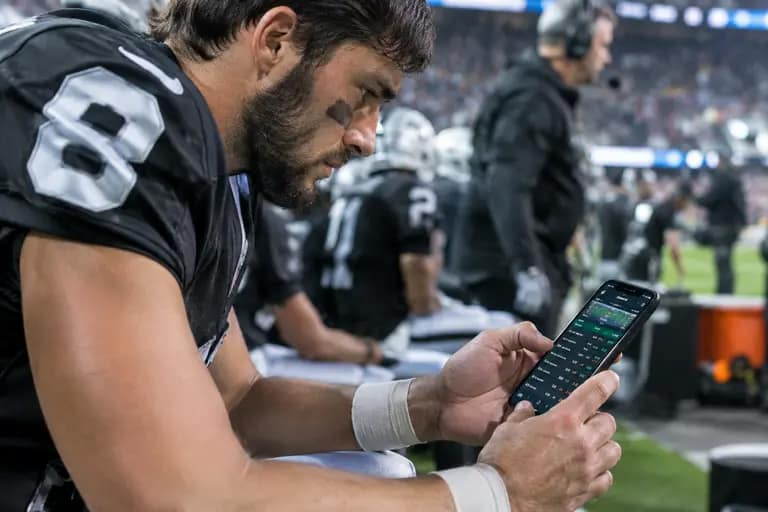
Online sports betting can compress decision time. That compression is where psychology becomes a practical risk control issue, not a side topic. The January 2026 national survey cited in the research notes found that 46% of people who bet on sports in the prior 12 months did so only through online or mobile channels. The same notes said those bettors tended to bet more frequently, use more complex bets, and report higher incidence of negative financial impacts such as missed bill payments. Those patterns deserve a conservative response from anyone building a betting routine.
Tools That Slow The Decision
For bettors comparing online sports betting markets, the better question is not “Which app is fastest?” It is “Which process forces a pause?” A simple staking sheet, a cooldown timer, and pre-market notes can reduce emotional chasing. I prefer a written checklist before any wager: market type, reason for price interest, maximum stake, stop-loss point, and whether the same view is available at a better regulated operator. A related discussion of market psychology notes fits here because app design, promotions, and live betting all affect behavior.
Operator Comparison Without Chasing
Comparing operators is still useful, especially in states with several licensed sportsbooks. Bettors can examine market depth, available props, live-betting latency, cash-out terms, limits, and account tools. For those exploring options within the same network, they can visit Champion Sportsbook, while also checking jurisdiction, house rules, and responsible gaming settings directly before relying on any operator page. No odds are quoted here because prices move before kickoff, and stale numbers can distort analysis.
- Use only regulated access available in the bettor’s own jurisdiction.
- Record every wager by sport, market, stake, price, and result.
- Separate pregame analysis from live-betting decisions.
- Set deposit, loss, and time limits before opening an app.
Retail Decline In Major U.S. States
The 2026 retail decline in major states was a market-structure signal. Retail books remained part of the regulated system, especially around casinos and sports venues, but their share of handle in the supplied data was small beside mobile activity. That makes the retail counter less central for price discovery and more relevant as a controlled, slower setting for some bettors.
For disciplined bettors, the lesson is not that one channel is good and the other is bad. The lesson is that channel design affects behavior. A retail book may limit frequency through friction. A mobile account may improve comparison and tracking if the bettor uses tools before emotion takes over. Online sports betting should be treated as a higher-access format that requires stricter personal rules, especially in markets where props and live options are always close at hand.
As of October 29, 2026, the available data pointed to a clear shift in where handle was placed, but less certainty about whether individual bettors improved their decision quality. That uncertainty should keep the analysis grounded. The strongest approach is to compare regulated markets carefully, avoid offshore shortcuts, ignore claims of certain profit, and make discipline measurable before considering any event, team, or price.