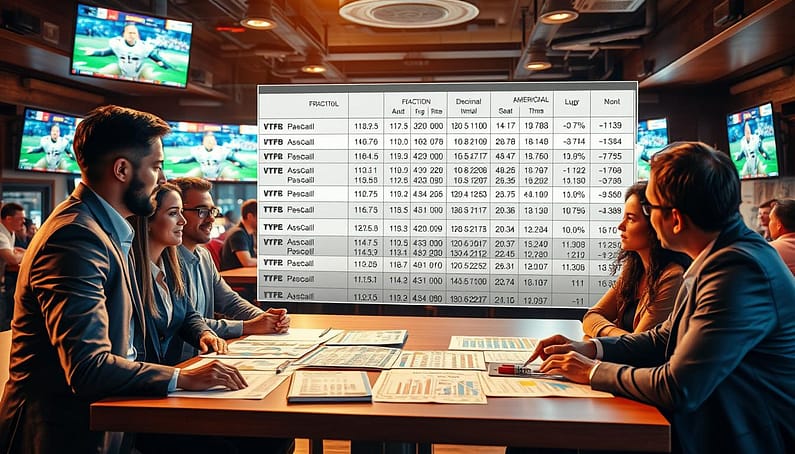
Welcome to the intellectual casino where numbers tell stories and probabilities whisper secrets. This is your orientation to the three dominant languages of gambling.
American moneyline odds speak in pluses and minuses like a political poll. European decimal odds calculate with continental efficiency. British fractional odds maintain tradition like a proper cup of tea.
We’ll explore how each format presents the same mathematical truth through different cultural lenses. From DraftKings’ American-centric approach to Bet365’s global decimal dominance.
Think of this as learning financial markets – same underlying assets, different trading platforms. By the end, you’ll grasp why -150, 1.67, and 2/3 are just different dialects saying “this team is probably going to win.”
Reading & Understanding Each Format
Betting odds have different ways of speaking on both sides of the Atlantic. In America, odds show who’s favored and who’s the underdog. It’s like looking at the political scene in numbers.
For example, when you see Steelers +585 versus Chiefs -760, it’s like a political showdown. The negative number (-760) means you’d need to bet $760 to win $100 on the favorite. The positive number (+585) means a $100 bet could net you $585 if the underdog wins.
Decimal odds are clear and straightforward, like a menu with everything included. A decimal odd of 2.50 means you’ll get $2.50 back for every $1 bet. This includes your original stake plus $1.50 profit.
Fractional odds are elegant, like something Jane Austen would approve of. For instance, 13/5 for Brooklyn Nets means you’ll profit $13 for every $5 wagered. Your total return would be $18 ($13 profit + $5 stake).
Why does this matter? Each format tells the same story in its own way. American odds show risk versus reward. Decimal odds focus on total return. Fractional odds highlight profit ratios. Smart bettors learn to compare odds across all formats to find the best value.
| Format | Example | $100 Bet Return | Best For |
|---|---|---|---|
| American | +250 / -350 | $350 profit / $128.57 profit | Risk-reward analysis |
| Decimal | 3.50 / 1.65 | $350 total / $165 total | Quick total return calculation |
| Fractional | 5/2 / 1/3 | $250 profit / $33.33 profit | Profit-to-stake ratios |
Decimal odds make international betting feel straightforward, like using the metric system. American odds reflect our political views. Fractional odds keep tradition alive, like afternoon tea.
Being able to compare odds across formats is key for strategic betting. It’s not just about numbers; it’s about understanding different cultures and financial stakes. Your betting passport is now more valuable.
Calculating Implied Probability
Ever wonder why casinos always seem to win? It’s not just luck – it’s math disguised as magic. Welcome to the world of implied probability, where we decode the bookmaker’s secret language.
Think of implied probability as the translator between betting odds and real-world chances. That -150 next to your favorite team? It’s whispering “60% chance of winning” in mathematical code.
Let’s break down the conversion algorithms that turn mysterious numbers into clear percentages:
| Odds Format | Favorite Calculation | Underdog Calculation | Example | Result |
|---|---|---|---|---|
| American | |Odds| ÷ (|Odds| + 100) | 100 ÷ (Odds + 100) | -150 favorite | 60% probability |
| Decimal | 1 ÷ Decimal Odds | 1.67 odds | 59.9% probability | |
| Fractional | Denominator ÷ (Numerator + Denominator) | 2/3 odds | 60% probability | |
Here’s where it gets fascinating. When you add up all possible outcomes’ probabilities, you’ll often find they exceed 100%. That extra percentage? That’s the vig – the house’s built-in profit margin.
It’s like finding the hidden fee in your phone bill. The vig is why sportsbooks always win in the long run. Smart bettors use this knowledge like financial analysts spotting market inefficiencies.
An odds calculator becomes your best friend here. These digital tools instantly convert odds into probabilities, revealing the true cost of each bet. They’re the financial calculators of the sports betting world.
Remember: implied probability shows what the bookmaker thinks will happen, not necessarily what will happen. The difference between these two perspectives is where sharp bettors find their edge.
Master this conversion skill, and you’ll never look at betting lines the same way again. You’ll see probabilities instead of numbers, value instead of randomness. That’s how recreational gamblers become strategic bettors.
Comparing Odds Across Sportsbooks
Welcome to the world of sports betting, where the real action is before the game starts. You’re like a Wall Street trader looking for deals, not just placing bets. A small difference in odds can lead to big profits over time.
Why do sportsbooks have different prices for the same game? It’s all about market economics. Each book has its own risk level, customer base, and costs. For example, FanDuel might attract casual bettors, while PointsBet draws sharp players. This leads to price differences that smart bettors can use to their advantage.
Let’s look at last weekend’s NFL games. The Kansas City Chiefs were -7.5 points at most books. But the real story was in the juice:
| Sportsbook | Chiefs -7.5 Price | Implied Probability | Edge vs Market Average |
|---|---|---|---|
| DraftKings | -110 | 52.38% | -0.5% |
| FanDuel | -105 | 51.22% | +0.7% |
| BetMGM | -115 | 53.49% | -1.6% |
| Caesars | -108 | 51.92% | +0.1% |
Notice the 1.6% difference between FanDuel and BetMGM? That’s a big deal. Imagine finding these advantages on every bet. Your bankroll would grow fast, like crypto in a bull market.
International books often offer even better deals. Asian operators like Pinnacle have sharper lines and lower margins. Their Premier League prices are often 2-3% better than UK books. That’s free money for Americans who know how to shop globally.
The secret to efficient betting isn’t just predicting games better. It’s about finding mispriced bets. You’re not betting on Patrick Mahomes’ arm. You’re betting against bad pricing. The sportsbook that offers -105 instead of -110 pays you for being smart.
Modern tools make comparing odds easy. Odds screens show prices from dozens of books in real-time. Pros have accounts at 8-10 sportsbooks. Why take one price when you can choose the best?
Remember, sportsbooks compete for your business. Use their rivalry to your advantage. That half-point difference might seem small today. But over a season, it can be your mortgage payment. Now that’s what I call efficient betting.
Practical Odds Shopping for Strategic Bettors
Shopping for the best deal isn’t just for Black Friday. Odds arbitrage is a way to find great financial opportunities. It’s not gambling; it’s smart investing.
Finding Chiefs at -760 on one book and -730 on another is not luck. It’s finding hidden value. This small difference can add up over time, making you an investor, not just a bettor.

Building a personal odds-shopping plan is like creating an investment portfolio. Always check multiple books before betting. It takes seconds but can pay off for years.
The difference in point spreads is like buying Apple stock at different prices. A half-point can make a big difference in your profits. It’s like investing in thousands of shares.
Choosing between same-game parlays on DraftKings and straight bets on Bet365 is a big decision. One is like a fancy cocktail, the other a simple whiskey. Both can get you there, but at different costs.
Managing your bankroll wisely is key. Pros risk only 1-5% per bet. Amateurs risk everything, like playing with rent money. Your bankroll is your investment capital.
Why this discipline matters: Being patient in odds shopping sets you apart. It turns the casino’s edge into a negotiable advantage. Strategic shopping can change the game.
Think of yourself as a financial analyst for sports. Your job is to find the best value, not just predict winners. This is the real challenge.
This approach turns betting into smart investing. You’re not just hoping for wins; you’re looking for value. And value always prevails in the long run.
Leveraging Odds Changes as Data Signals
Odds changes are like stock tickers in sports betting. Each shift tells us what the smart money knows. These changes are not random. They are market intelligence hidden in numbers.
When odds move, it shows the collective wisdom of many bettors. They vote with their money, showing their confidence in teams.
Why do odds change? Several factors cause these shifts:
- Injury reports that change team abilities
- Weather conditions affecting the game
- Sharp money from professional bettors
- Public betting patterns creating momentum
When the Steelers’ odds drop from +585 to +500, it’s not magic. It’s math and market insight. Someone believes in Pittsburgh more than before. This could be because of opponent weaknesses or team improvements.
Point spread changes tell a detailed story. A shift from -3 to -3.5 is more than just a half-point. It shows a big change in how the market sees the game. That extra half-point could mean a big difference for many bettors.
Platforms like Bet365 make sports betting live. Odds change during games. This gives great chances for those who can spot the signals. If a key player gets hurt, odds can change a lot. Watching closely, you can make money before the market adjusts.
| Movement Type | Possible Meaning | Strategic Response | Risk Level |
|---|---|---|---|
| Sharp line move (rapid) | Professional money entering | Consider following sharp action | Medium |
| Public-driven move (slow) | Casual bettors flooding one side | Look for contrarian opportunities | Low to Medium |
| Reverse line movement | Sharp money against public sentiment | Strong contrarian play | High |
| Game-time adjustment | Last-minute information | Quick decision required | Variable |
Professional bettors look at odds changes to find smart money. They compare odds across books to find where the market is wrong. If one book has a team at +150 and another at +175, that’s a chance.
The skill to compare odds movements makes sportsbooks like prediction markets. These markets gather info from many sources, making surprisingly accurate forecasts. It’s like democracy, but with money on game outcomes.
Next time you compare odds, don’t just look for the best price. Understand the reasons behind the changes. The answers could give you the edge to become a strategic investor.
Tools & Calculators
Welcome to your digital betting utility belt – where math meets modern convenience. Think of these tools as your personal Alfred Pennyworth, always ready with the right gadget for your betting adventures.
Odds converters serve as your universal translator in the global betting marketplace. They instantly transform American odds into decimal or fractional formats with a single click. No more mental gymnastics while comparing international books.
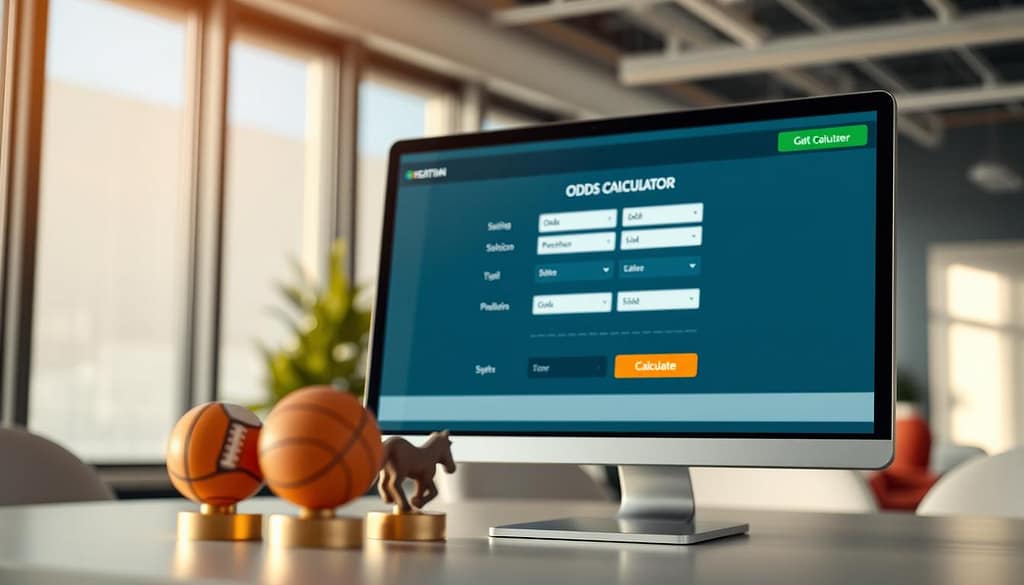
Implied probability calculators reveal the hidden truth behind those shiny numbers. They answer the fundamental question: What percentage chance is the sportsbook actually giving this outcome? Suddenly, that -110 bet doesn’t look quite as appealing when you see it represents a 52.4% implied probability.
Most major platforms like DraftKings and FanDuel build these calculators directly into their mobile apps. The trick is knowing where to find them and how to use them effectively. They’re usually tucked away in the “Tools” or “Help” sections – like finding the secret menu at In-N-Out Burger.
Independent tools take this to the next level by scanning multiple sportsbooks simultaneously. These are your betting radar systems, identifying value discrepancies across the entire marketplace. Some even specialize in arbitrage opportunities – those rare moments when different books’ odds create risk-free profit scenarios.
Let’s break down the essential tools every smart bettor should have bookmarked:
- Parlay calculators that show how combining bets multiplies both risk and possible reward
- Hedge calculators for locking in profits when games take unexpected turns
- Bankroll management apps that prevent emotional betting disasters
- Odds comparison engines that scan dozens of books in real-time
The sophisticated odds calculator does more than basic math – it provides strategic insight. It helps you understand exactly what you’re buying before you place your money. This isn’t about finding magic formulas; it’s about making informed decisions.
Here’s how the top tools stack up against each other:
| Tool Type | Primary Function | Best For | Mobile Access |
|---|---|---|---|
| Odds Converter | Format translation | International betting | Yes |
| Probability Calculator | Value identification | Strategic bettors | Yes |
| Parlay Calculator | Multi-bet analysis | Risk assessment | Yes |
| Arbitrage Scanner | Cross-book analysis | Advanced users | Limited |
Remember: technology won’t make you win, but it will make you smarter about how you lose. These tools provide the analytical firepower to turn guessing into calculating. The modern bettor’s edge doesn’t come from inside information – it comes from better information processing.
Your odds calculator becomes your most trusted advisor in the chaotic world of sports betting. It’s the voice of reason when emotions try to override logic. And in a game where the house always has the mathematical advantage, every percentage point of smarter decision-making counts.
Conclusion: Becoming Odds-Savvy
We’ve reached the end of our odds education journey. Now, betting is seen as a smart strategy, not just a gamble. The savvy bettor knows that -150, 1.67, and 2/3 all tell the same story of probability.
Shopping around at DraftKings, Bet365, and William Hill is smart, not cheating. Odds changes hint at market secrets. Calculating implied probability shows the house’s edge. The best bet sometimes is to not bet at all.
The gambler’s paradox is clear: the house wins in the long run. But smart bettors make them work for it. Knowing when to stop betting is key. The smartest gamblers know sometimes the best choice is to not bet.
Now, bet with wisdom—may the odds be in your favor. Your journey to being odds-savvy is done. But the real learning starts with every smart bet you make.