

The World Cup does not behave like a normal soccer betting cycle. It compresses global attention, national emotion, casual money, sharper trading, breaking team news, late lineup reactions, and in-play volatility into one tournament window. For bettors who usually approach live wagering with a simple “watch and react” mindset, that environment can feel exciting. It can also be dangerous.
The 2026 FIFA World Cup adds another layer. With the tournament running from June 11 to July 19 across the United States, Canada, and Mexico, and with 48 teams instead of the traditional 32-team format, the betting market will be bigger, busier, and noisier than many bettors are used to seeing. More matches mean more live markets. More global attention means more public money. More public money means sharper bettors will be watching for inefficient reactions.
That does not mean smarter bettors should avoid live betting during the World Cup. It means they need a better process. World Cup betting volume can create opportunity, but only when bettors understand how volume changes price movement, liquidity, timing, and emotional decision-making.
Why World Cup Betting Volume Is Different
Most regular-season betting markets develop inside a familiar rhythm. Bettors know the schedule, teams play in predictable windows, and the public attention is spread across multiple leagues or sports. The World Cup is different because it pulls attention into a single global event.
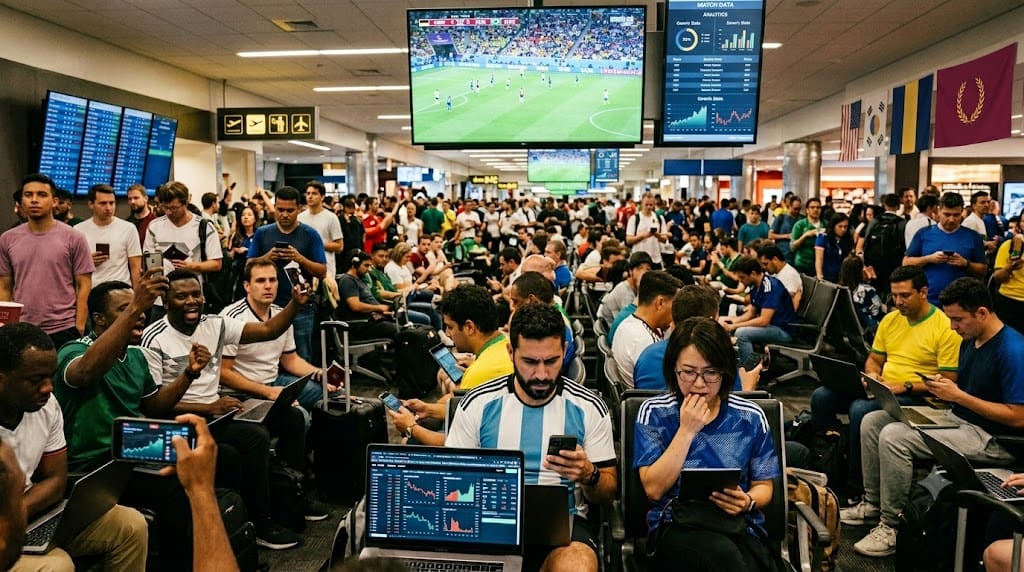
A group-stage match between a favorite and an underdog may attract casual bettors who rarely bet soccer. A knockout match involving Argentina, Brazil, England, France, Spain, Mexico, or the United States can generate massive pre-match and in-play activity. National pride also changes the psychology of the market. Bettors often back teams they love, teams they recognize, or star players they want to see succeed.
That extra volume matters because it can make live markets move faster. Odds may shift aggressively after an early goal, a VAR review, a tactical substitution, a red card, or even a visible momentum swing. But movement alone is not value. Sometimes the market is correcting accurately. Sometimes it is overreacting.
The smarter bettor’s job is not to chase movement. It is to ask whether the new price still reflects the actual match state.
Live Betting Strategy Starts Before Kickoff
The biggest mistake in live betting is assuming all the work happens after the match starts. During the World Cup, that approach gets exposed quickly. By the time a casual bettor reacts to an early press, a dangerous counterattack, or a substitution pattern, the live price may have already adjusted.
Strong live betting starts with pre-match preparation. Before kickoff, bettors should already understand the baseline expectation for each team: tactical style, projected lineup, rest advantage, injury concerns, group-stage motivation, and how the matchup is likely to look if one side scores first.
A bettor watching a defensive underdog survive pressure for 20 minutes should not automatically assume the favorite is “due.” That may have been the expected game state all along. Likewise, a favorite conceding early does not automatically create value if the underdog’s setup is built to defend deep and kill tempo.
This is where a disciplined live bettor separates observation from interpretation. For a deeper foundation on how live markets function, YouCanBetOnIt’s guide to in-play betting strategy is a useful internal starting point because it explains how real-time odds, momentum, and dynamic markets reshape decision-making.
How Higher Volume Changes Live Odds Movement
When betting volume increases, markets often become more liquid. That can be good for bettors because there may be more available lines, more derivative markets, and faster pricing updates. But liquidity does not automatically mean the market is easy to beat.
In a World Cup setting, higher volume can create two opposite effects. First, it can make major markets more efficient because sportsbooks and sharp bettors are watching closely. Second, it can create temporary distortions in secondary markets where public bettors overreact to visible events.
The main match result market may become difficult to attack after a goal because books adjust quickly. But props, corners, cards, next goal, team totals, or alternate lines may move unevenly depending on how bettors react.
| Live Betting Factor | What Changes During the World Cup | Smarter Bettor Response |
|---|---|---|
| Public Volume | More casual money enters popular matches | Avoid chasing national-team hype |
| Odds Speed | Prices move rapidly after goals, cards, and VAR moments | Prepare scenarios before kickoff |
| Market Depth | More live props and alternate markets appear | Compare prices instead of forcing one market |
| Emotional Pressure | Bettors react to star players and national loyalty | Use staking rules before emotions rise |
| Liquidity | More money can improve availability but reduce easy edges | Focus on timing and price discipline |
The best live bettors do not treat every price move as a signal. They treat it as a question: what changed, and did the odds move too far?
The Danger of Betting the Crowd’s Emotion
World Cup matches create emotional betting at scale. Fans want action on their country. Casual bettors want to be involved in marquee games. Many bettors overvalue famous players, historic teams, and dramatic narratives.
That emotional pressure can be especially strong in live betting because every moment feels urgent. A favorite misses two chances, and bettors pile into the next goal market. A star forward looks frustrated, and bettors assume the underdog can hold. A red card arrives, and the market may swing violently before the actual tactical impact becomes clear.
The smarter bettor has to slow the game down mentally. A red card is not automatically a bet. A goal is not automatically a reset. A momentum shift is not automatically predictive. The question is always whether the new price is better than the real probability.
This is also why sportsbook preparation matters. During global events, operators expand markets, strengthen live platforms, and prepare for heavier demand. A useful outside perspective on this broader industry shift is this look at World Cup sportsbook preparation, which explains how tournament fever affects sportsbook operations, markets, and bettor engagement.
For the bettor, the lesson is simple: more markets do not mean more good bets. More markets mean more decisions. And more decisions require a stronger filter.
Timing Matters More Than Prediction
Many bettors think live betting is about predicting what happens next. That is only partly true. In reality, live betting is often about timing.
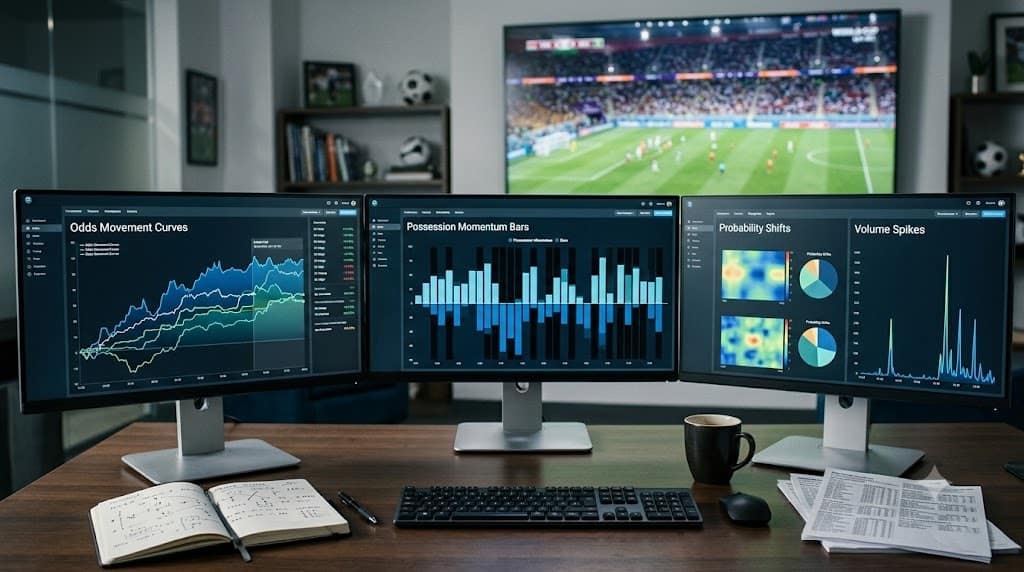
Two bettors can have the same opinion and get very different results based on when they enter the market. Betting a favorite immediately after conceding may be different from waiting five minutes to see whether the favorite’s structure holds. Taking an underdog after 30 minutes of pressure may be different from taking the same underdog after it has stabilized possession and forced the favorite into lower-quality shots.
During the World Cup, price windows can close quickly. That creates pressure to act fast, but speed without preparation is just guessing faster.
A smarter live betting routine should include three checkpoints:
- What was the expected match script before kickoff?
- What has actually changed in the game state?
- Has the price moved more than the probability has changed?
That is the core discipline. The bettor is not trying to win every live moment. The bettor is trying to identify when the market has briefly become too emotional, too slow, or too aggressive.
Why Props and Secondary Markets Need Extra Care
World Cup betting volume does not only affect moneylines, spreads, and totals. It also affects player props, cards, corners, shots, assists, saves, and team-specific live markets.
These markets can be attractive because they may not always be priced as efficiently as the main result market. But they also carry risk because small sample events can swing outcomes quickly. A winger who looks dangerous may still be substituted early. A referee known for strict card discipline may manage a knockout match differently than expected. A team chasing the game may produce corners, but not necessarily high-quality chances.
Smarter bettors should avoid treating prop volume as proof of value. A popular player prop can become overpriced because fans recognize the name. A card market can become inflated after one heated exchange. A corner line can overcorrect after a team spends five minutes in the attacking third.
The best approach is to connect props to match state. If a team’s shape, substitutions, and incentive all support a prop angle, the bet may be worth considering. If the only reason is that the broadcast keeps showing a star player, the edge may already be gone.
Bankroll Rules Matter More During Global Events
The World Cup is built to tempt overbetting. There are early matches, late matches, group-stage drama, knockout pressure, and constant storylines. A bettor can easily convince themselves that every match deserves action.

That is where bankroll structure becomes more important than opinion strength. The more intense the tournament, the more boring the staking plan should become. Flat staking, capped exposure, and pre-set live betting limits can prevent one emotional match from damaging the entire betting month.
A useful rule is to separate entertainment bets from strategy bets. If a bettor wants a small wager on their national team for fun, that should be treated differently from a calculated live market position. Mixing those categories creates confusion. The bettor starts justifying emotional bets with analytical language.
World Cup live betting should never become a chase environment. If a match moves against the position, the answer is not automatically to double down. Sometimes the original read was wrong. Sometimes the price is no longer valuable. Sometimes the best live bet is no bet.
A Smarter Framework for World Cup Live Betting
The right World Cup live betting framework is not complicated, but it does require discipline. Bettors should prepare before kickoff, monitor live context, compare price movement to probability movement, and avoid emotional reactions to crowd noise, commentary, or national bias.
| Betting Moment | Common Mistake | Smarter Adjustment |
| Early Goal | Chasing the team that conceded without checking tactics | Evaluate whether the match script truly changed |
| VAR Review | Betting during confusion or emotional delay | Wait for confirmed market reset |
| Red Card | Assuming automatic dominance for the other side | Study formation, scoreline, and time remaining |
| Heavy Favorite Pressure | Mistaking possession for value | Look for shot quality and defensive control |
| Late Knockout Drama | Overbetting because urgency feels high | Reduce stake size and demand a clear edge |
The World Cup will create more live betting opportunities than most bettors can reasonably process. That is why selectivity becomes an edge. Smarter bettors do not need action on every match. They need a repeatable way to identify when the live market has moved away from fair probability.
The Edge Is Patience, Not Volume
World Cup betting volume changes the live betting environment because it increases speed, emotion, market depth, and public participation. That can create opportunities, but it can also punish bettors who confuse activity with strategy.
The smartest bettors will not try to beat the World Cup by betting more. They will try to bet cleaner. They will know the match script before kickoff, wait for prices that actually offer value, avoid emotional reactions, and protect their bankroll when the tournament atmosphere gets loud.
Live betting during the World Cup can be exciting, but excitement is not an edge. The edge comes from preparation, timing, discipline, and the ability to say no when the market is moving faster than your process.