
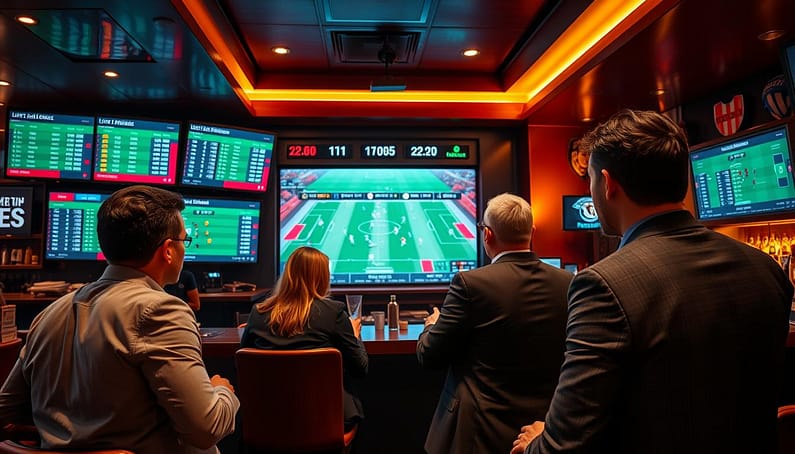
Do you remember betting hours before a game started? It feels as old as dial-up internet.
The world of sports betting has changed a lot. We’ve moved from just waiting to actively participating. Now, we do more than just guess – we analyze.
I’ve seen this change myself. What used to be simple odds are now complex analytics. It’s like something Nate Silver would create.
Bookmakers are racing to keep up with the game’s changes. But sharp bettors find the hidden opportunities. They spot the moments when odds are off.
Finding these chances is like discovering money on the street during tough times. People on Trustpilot love platforms like InPlayGuru for helping them find these opportunities.
This shift isn’t just about new tech. It’s a change in how we think. We’re not just guessing anymore. We’re part of the game itself.
Fast-Paced Data for Edge
Finding a twenty-dollar bill on the sidewalk is like bookmakers’ algorithms glitching during big game moments. When their systems are down, you get a chance to make smart bets.
Odds can stay wrong for nearly a minute after big events. This is a long time in sports betting, giving you time to place several bets.
The key is Real-time stats that really count. Not just what commentators talk about, but the numbers that show where the game is going:
- Possession percentages in dangerous areas
- Expected goals (xG) momentum
- Shot locations and frequency
- Pass completion rates in final third
These aren’t just fancy numbers for Twitter. They’re your guide, showing the game’s future before oddsmakers even start their day. It’s like having secret information without the risk of jail.
The best part? Bookmakers’ systems take seconds to adjust. Your brain works faster than theirs. So, while they’re catching up, you’re making money from wrong odds.
It’s like a legal trick in the matrix. The house has fancy computers, but you have something better. You use human insight and real-time stats that matter.
Reacting to Tactical Shifts in Game
Watching a game without understanding tactics is like trying to read Ulysses without knowing English. You see the action but miss the meaning. The real magic happens when managers make those subtle mid-game adjustments that completely rewrite the script.
I’ve learned to spot these changes through careful in-game analysis. It’s not about being a tactical genius. It’s about noticing the small things before the commentators do.
When a team shifts from 4-3-3 to 3-5-2, it’s not just coaching vanity. It’s a fundamental recalibration of the entire match dynamic. The pressing triggers change. Passing patterns evolve. Suddenly, what worked five minutes ago might be completely obsolete.

Football becomes this beautiful, chaotic game of rock-paper-scissors at breakneck speed. Team A makes a move. Team B counters. And here’s the beautiful part – the odds always lag behind this dance.
That delay is your window of opportunity. That’s when you can actually become the house instead of just betting against it. The key indicators I watch for:
- Positional changes among midfielders
- Altered pressing intensity
- Shifts in build-up patterns
- Changes in defensive line height
Mastering these in-game analysis techniques transforms how you approach in-play betting tactics. You stop reacting to goals and start anticipating them. You see the momentum shifts before they appear on the scoreboard.
The best part? You don’t need a coaching license. You just need to pay attention to the right things at the right time. The game tells you everything – if you know how to listen.
Best In-Game Metrics to Watch
If you only look at the score during in-play betting, you’re missing out. The real story is in the numbers that fans often overlook.
Let’s talk about possession stats. When one team controls the ball for 65%+, they’re not just playing keep-away. They’re building pressure like a suspenseful movie climax. This pressure eventually breaks defenses.
Territory advantage shows who’s in control. A team spending 70% of their time in the opponent’s half isn’t just visiting. They’re setting up camp and planning to stay.
Shots on goal show who’s really in the game. A team with 12 shots versus their opponent’s 3? That’s not luck – it’s a systematic dismantling waiting for its payoff moment.
Turnovers are the plot twists of football. A team forcing multiple turnovers isn’t just playing defense. They’re rewriting the game’s narrative in real time.
Yards per play might sound boring, but it’s key. Consistently high YPP means a team isn’t just moving. They’re marching toward something.
The real magic happens when these metrics create momentum shifts. You can feel when a game’s energy changes direction like a political debate turning against a candidate.
Smart bettors watch for these momentum indicators: sudden possession spikes, rapid-fire shots on goal, or consecutive successful drives. These aren’t random events. They’re patterns revealing which team has seized control.
Remember: goals confirm what the metrics have been screaming for twenty minutes. The team dominating these numbers might be down on the scoreboard. But they’re winning where it counts – in the story the stats are telling.
Adjusting Bets in Real Time
Live betting is like conducting an orchestra in the middle of a show. The music keeps going, whether you’re ready or not. You’re like the person backstage adjusting the sound levels. The real magic is in understanding that live odds are more than just numbers. They show the crowd’s emotions, from panic to euphoria.
My “three-touch rule” is like a financial circuit breaker. If there are three attacks without odds changing, the market is asleep. It’s like finding a twenty-dollar bill in an old jacket – it’s a nice surprise.
Most punters miss this: live odds change quickly. When a favorite gives up early, the market panics. This creates chances to make money, like Warren Buffett finds.
Adjusting bets smartly means spotting temporary craziness. A goal in the 70th minute doesn’t change the game’s control. It’s a chance to make money, like buying stocks at a low.
Hedging bets is an art here. If a pre-match bet looks shaky, live odds let you protect it. It’s like insuring a valuable painting. You’re not just betting on the game; you’re betting against your past self.
Finding pricing errors is key. Bookmakers’ algorithms can glitch, like Windows 95. Spotting these errors takes focus and speed. It’s like finding your favorite band playing a secret show.
Odds move in waves of overreaction and correction. Your job is to ride these waves better than others. It’s not about predicting the score; it’s about finding value when the market is wrong.
Mid-game strategy shifts show who’s a pro and who’s not. It’s not about having a crystal ball. It’s about having a good compass when everyone else is lost. The best part? Live odds give you endless chances to make it right.
Mobile Apps and Notification Tools
Your smartphone is like a Swiss Army knife for live betting. It’s all about knowing which tools to use. Most betting apps are like fortune cookies, but top-notch notification systems are game-changers.
InPlayGuru’s Telegram integration is a game-changer. It sends alerts like a secret advisor. One user said it’s like having a sixth sense during games, knowing when odds change.
Customizing alerts is key. I set mine for 65%+ possession stats, xG differentials over 1.5, or when key players come in. It’s not info overload; it’s information curation.
Third-party stat apps add to the mix. With multiple screens, you’re like a sports broadcasting center. I track advanced metrics on one device, odds on another, and bet on the third. This is tactical triangulation.
The secret to success is an adaptive strategy that changes with the game. Your notifications should be strategic, not just random updates. When set up right, these tools give you decisions.
Setting up these tools takes time, but it’s worth it. You’re not just reacting to the game; you’re anticipating its moves. The right tools turn your phone into a strategic partner, helping you beat the markets.
Managing Risks
In-play betting without risk protocols is like trying to defuse a bomb while watching TikTok tutorials. The excitement peaks right before everything explodes. I learned this lesson in my “early genius phase,” where I thought my analytical skills could outpace market realities. But the market, it turns out, remains unimpressed by human brilliance.

Now, I follow the 3-2-1 protocol, something Wall Street quants would envy. Never risk more than 3% of your bankroll per session. Cap individual bets at 2%. And when you hit three consecutive losses? That’s your signal for a mandatory 1-hour cooldown. This isn’t just money management; it’s psychological armor against the siren song of “just one more bet.”
The real secret weapon in quick decision-making isn’t speed – it’s restraint. Professional gamblers don’t win because they make more bets; they win because they make fewer stupid ones. Your most valuable asset isn’t your betting app or statistical models. It’s your ability to recognize when the odds are playing you instead of the other way around.
Implement these concrete safeguards:
- Stop-loss limits: Pre-determine your loss threshold before entering any session
- Emotional circuit breakers: When you feel that adrenaline surge, that’s your cue to pause
- Bankroll partitioningNever let today’s losses compromise tomorrow’s opportunities
Remember: sometimes the most sophisticated quick decision-making involves deciding not to decide. The market will always present another opportunity. Your bankroll? That might not be so generous with second chances.
Examples of Success
Imagine a Champions League quarterfinal where an English team is down 1-0 to Spanish opponents. The scoreboard looks bad, but the stats tell a different story. They have 72% of the ball and expected goals of 2.1 to 0.8. Yet, the live moneyline is +350 for the English team.
This isn’t just betting; it’s finding money that emotional bettors miss. Sharp players who know the numbers behind the game have built bankrolls this way.
Consider the red card overreaction. A team loses a player, and the odds against them skyrocket. But, organized teams often get tighter after the shock. The smart money bets on this pattern when others overreact.
These aren’t just stories; they’re real patterns I’ve used to make money. The key is understanding that games are like living stories where odds sometimes don’t match reality.
A Trustpilot testimonial from a bettor shows how this works: “I made $4,200 from $500 in one Premier League weekend. I tracked possession shifts and manager changes. When a top team goes behind but keeps attacking, the odds are too good to pass up.”
Another example from Sharp Football Analysis shows how to make money from live odds changes during weather. When rain gets heavy, over/under markets often adjust too much.
The real skill is in having an adaptive strategy that sees beyond what’s obvious. It’s about understanding the game’s hidden dynamics. This is where sharp players find their edge.
This adaptive strategy sets pros apart from casual bettors. It’s not about guessing the future; it’s about spotting moments where odds and reality don’t align. The best live bettors are not fortune tellers but smart opportunists.
Conclusion
So, we’ve reached the end of our in-play betting journey. It’s not about guessing or luck. It’s about learning tactical patience.
You watch the game and analyze data at the same time. You spot patterns and act with precision. In-play betting is a mix of quick actions and patience.
You must act fast when chances come up but wait patiently for them. In-play betting adds new layers to sports betting. It’s like playing a game of chess.
Those who see patterns, manage risks, and adjust strategies win. Think of it like a Bundesliga match. The stats before the game are one thing, but the real action starts when the game begins.
Winning at in-play betting is not just luck. It’s about analyzing in real-time and acting with discipline. The outcome depends on how well you play the game within the game.