
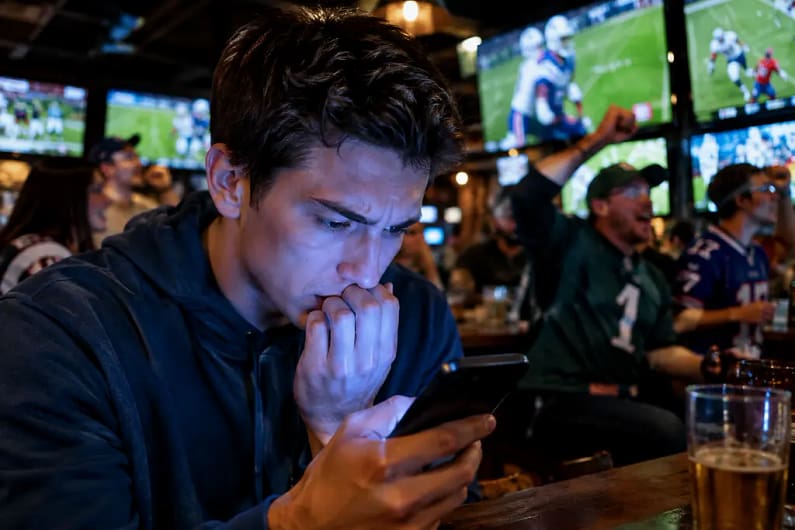
NFL Bettor Behavior is not only a question of team loyalty, injury reports, or price shopping across sportsbooks. As of November 1, 2026, the sharper issue is how tighter rules around promotions, complex wagers, limits, and live betting may change the way adults think and act during the NFL betting cycle. This analysis does not include current odds because the research supplied did not provide operator-attributed lines, and prices move before kickoff.
The evidence points to a practical tension. Regulation can reduce harmful cues, but it can also shift bettor activity rather than end it. Some bettors take longer breaks, some reduce exposure after trust-related concerns, and others move from one league or market type to another. For NFL markets, that matters because football is one of the most frequently bet sports in the research record supplied for this topic.
NFL Bettor Behavior Under Tighter Rules
NFL Bettor Behavior Signals To Track
The most useful starting point is overconfidence. A Stanford University policy brief for 2025-26 found that American sports bettors show strong overoptimism: bettors expect to break even, while losses averaged $0.075 for every dollar wagered, with the bias especially pronounced in parlays and more complex bet types Stanford betting brief. That finding fits the NFL betting environment because game-day menus often include spreads, totals, player props, same-game parlays, and live markets.
NFL Bettor Behavior changes when regulation reduces the cues that feed overconfidence. A rule that limits aggressive bonus language, requires clearer loss disclosures, or slows re-marketing after a limit change does not predict who wins a game. It changes the decision setting. The bettor sees fewer prompts to add legs to a parlay or re-enter a market after a losing drive. That is a psychological change before it is a financial one.
The more cautious reading is that regulation cannot remove risk from betting. It can only shape exposure, friction, and feedback. For bettors comparing regulated NFL markets, the discipline question is less about finding a single attractive number and more about asking whether the market format encourages quick, emotional decisions. Live wagering after a turnover, a missed field goal, or a high-profile injury can be especially reactive, even without any change in the bettor’s original view of the matchup.
Promotion Controls And Bettor Discipline
Bonus Cues, Breaks, And False Confidence
Promotions matter because they can make a wager feel less costly than it is. The research notes for this article included a Florida poll from January 30-February 3, 2026, in which only 10% of bettors said they were very confident they could reliably make money betting on sports, while 83% reported taking breaks from betting for more than one month in the prior year. The same poll found that 73% said they bet because of a promotion or bonus offer. Those findings suggest a behavioral split: many bettors are not fully confident, yet promotional prompts still pull them back into the market.
For NFL Bettor Behavior, this is where stricter advertising and bonus rules may have the clearest effect. A Sunday schedule can concentrate attention, especially when multiple games are available across early and late windows. If a bettor has already set a limit or taken a break, repeated bonus prompts can weaken that boundary. A related analysis of stricter state rules addresses how limits, ad controls, and mental-health evidence can reshape bettor conduct without turning the discussion into picks.
Market comparison still has a place, but it should be separated from promotional pressure. A disciplined review compares regulated operators by available markets, house rules, bet settlement terms, responsible gaming tools, and pricing once current lines are posted. It does not treat a bonus as a reason to add exposure. Readers following public-policy coverage may find related reporting at Eyewitness News TV within the same media network.
Mental Health Evidence And Live Market Risk
Why Friction Can Be Protective
The mental-health evidence is not something bettors, operators, or regulators can ignore. A Johns Hopkins Bloomberg School of Public Health study using U.S. data from 2016-2023 reported that states with legalized online sports betting saw outpatient diagnoses for depression rise by about 6.7% for men and 5.5% for women, while anxiety diagnoses rose by about 7.2% for men and 6.5% for women; prescription fills for antidepressants and anti-anxiety medications increased in similar ways Johns Hopkins study.
That research does not prove every bettor experiences harm, and it does not isolate the NFL as the only driver. Still, it gives regulators a reason to focus on friction. Deposit limits, loss-limit cooling periods, time reminders, and pauses after responsible-gaming changes can help interrupt emotional betting loops. In NFL markets, those loops may appear after a fast scoring swing, a failed prop early in the game, or a parlay leg that pushes a bettor toward chasing.
NFL Bettor Behavior is better assessed by patterns than by single wagers. Warning signs include repeated deposits during one slate, increasing stake size after losses, adding live bets to feel involved, betting while using substances, or moving from simple markets into multi-leg products without a price-based reason. The research record supplied for this topic also noted that in-play betting studies connected substance use and betting to stay emotionally involved with greater spending and higher financial and relationship harms.
- Compare regulated books only after checking current operator terms and responsible-gaming tools.
- Separate market analysis from bonus prompts, especially before high-attention NFL games.
- Track stake size, bet type, and emotional state, not just wins and losses.
- Treat parlays and live wagers as higher-friction decisions, not default entertainment.
Market Comparison Without Manufactured Urgency

Props, Parlays, And Price Shopping
Sportsbook comparison remains useful when it is structured. NFL bettors can compare whether an operator offers main markets, player props, alternate totals, same-game parlays, or live betting controls. Yet more menu depth is not automatically better for the bettor. A deeper menu can support informed comparison, but it can also increase decision fatigue and encourage action on markets a bettor has not researched.
The research notes supplied for this topic reported that parlays and wagers involving more than one bet nearly doubled in popularity from 17% in 2018 to 30% in 2024 among sports bettors. That matters because complex wagers can make outcomes feel more controllable than they are. A bettor may understand one player prop, then attach it to four other legs and underestimate how quickly combined probability changes.
Regulation that requires clearer disclosure around complex wagers may help. So can operator design that makes limits easy to set and difficult to reverse impulsively. Still, bettors need their own process. A disciplined market review asks: What event is being priced? What rules apply? Is the bet pregame or live? Does the bettor have a reason for the market, or is the choice being driven by a prompt, a streak, or frustration?
NFL Bettor Behavior Discipline On November 1, 2026
NFL Bettor Behavior under stricter rules should be judged by reduced impulse, clearer expectations, and better respect for limits. The strongest evidence in the research points to overoptimism, mental-health strain, promotion sensitivity, and the special risk of complex or live betting formats. None of those points require a prediction on a winner, a spread, or a player prop.
For adults who legally evaluate NFL markets, the safer framework is simple: use current operator data only, assume odds will change before kickoff, compare rules before prices, and treat self-set limits as binding. Regulation can help create that structure, but psychological discipline has to carry it through the full slate.