
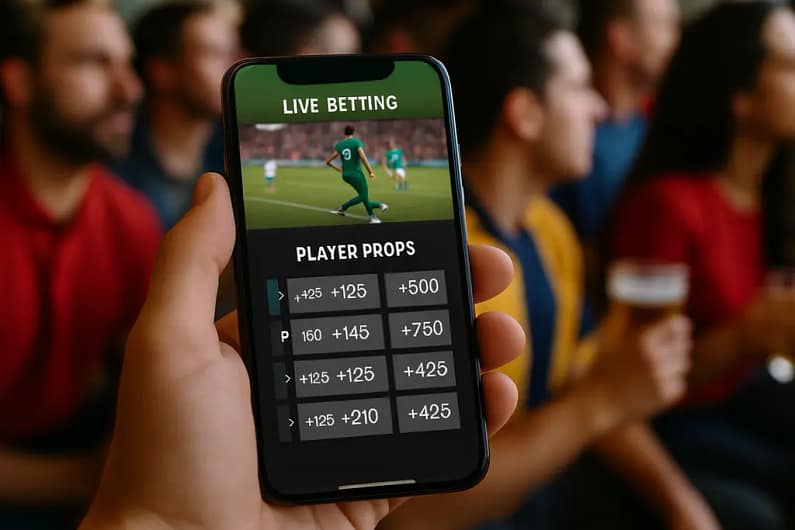
Player prop betting has become harder to evaluate as more markets move from pre-match menus into live match screens. The shift does not mean every in-play prop carries better value. It means bettors have more timing decisions, more combinations, and more chances to overreact to a single possession, pitch, shot, or substitution.
The recent evidence points in one direction: props are no longer a side category. During the concluded FIFA World Cup 2026 group stage in June 2026, research notes reported that roughly one-fifth of live bets across Kambi’s partner network were Bet Builder bets, up from a much smaller share across the 2022 tournament. Those builders often used player-level events such as shots on target, scoring, or assists. That growth matters because player markets are usually more granular than match-result markets, and granularity often brings wider pricing gaps.
My approach is not to chase the newest market type. It is to separate useful choice from noisy choice. A long menu can help a bettor compare assumptions, but it can also invite impulse betting. For educational insights related to the network, Champion Sportsbook provides valuable information while keeping the core task here focused on disciplined market review.
Why Player Prop Betting Moved In-Play
Live betting growth is tied to mobile access, broadcast exposure, and product design. A public securities filing referenced in the research notes said interactive, online, and mobile sports betting accounted for about 70% of total sports betting in 2025, compared with about 30% for retail channels, with forecasts above 75% by 2030 SEC filing. That broad channel shift helps explain why live markets can be refreshed, promoted, and combined quickly.
During FIFA World Cup 2026, the research set placed live betting at about 37% of total betting turnover across all markets, while pre-match betting still led at about 63%. That split is useful for context. Live betting has grown, but pre-match betting was still larger in that event sample. A cautious bettor should resist the idea that live automatically equals smarter. In many cases, live screens compress decision time while increasing emotional pressure.
Player Prop Betting And Bet Builders
Player Prop Betting now intersects heavily with same-game and bet-builder formats. The research notes reported that 65% of World Cup 2026 Bet Builder tickets included at least one player prop, compared with about 25% in 2022. That is a major product shift, but it should not be read as proof of bettor advantage. Combining markets can make a ticket feel more personal and informed, yet each leg still carries pricing assumptions.
The main evaluation point is correlation. A striker shots-on-target prop may relate to team possession, opponent defensive shape, substitutions, and score state. A scorer-or-assist leg may not behave independently from a team-goals leg. Without clear pricing, a bettor can end up accepting a margin that is difficult to see. That is why I prefer comparing the standalone prop, the live version, and the builder price before treating the combined option as attractive.
Player Prop Variety By Sport
Prop variety is not equal across sports. Soccer props often revolve around shots, shots on target, goals, assists, cards, fouls, and goalkeeper saves. Baseball props can include hits, total bases, strikeouts, walks, earned runs, and pitching outs. Football and basketball menus may vary sharply by operator, game state, and player availability. The research notes from the 2026 margin study reported that player-prop markets carried higher bookmaker margins than simple head-to-head bets, with baseball props described as especially numerous and expensive.
Soccer Props After Recent Matches
The World Cup 2026 group-stage examples show why soccer is central to this trend. Live soccer props can change after an early card, a tactical substitution, or a team protecting a lead. The question is not whether a player is talented. The sharper question is whether the live number reflects the new role and match script. A winger moved deeper after a red card may still be a known attacking player, but the shot expectation can change quickly.
This is where bettors need to slow the screen down. A live prop posted after a dangerous first 10 minutes may already bake in that surge. A player who has two early shots may attract public attention, but the price may have moved faster than the underlying projection. Player prop betting requires treating the live update as new information, not as an invitation to act.
NFL And MLB Prop Menus
The research notes from U.S. betting behavior reports said NFL bettors used props often, with one consumer report stating that 37% of NFL bettors placed prop bets during the 2025–2026 period. The same notes also said pre-match betting remained steady while live-bet engagement declined by about 10 percentage points from 2024 to 2025. Those two findings can coexist. Bettors may like props, yet still hesitate under live time pressure.
MLB is different because every plate appearance can reset the market. Pitch count, bullpen usage, weather, handedness matchups, and lineup position can all influence live and pre-match props. More markets can mean more comparison points, but the reported higher margin on props is a warning sign. If a bettor cannot estimate fair price or compare across operators, the larger menu may simply create more ways to pay a premium.
Margin, Speed, And Discipline Checks

My first live-prop question is simple: what changed since the opening number? If the answer is only “the player looks active,” that is rarely enough. A meaningful change should connect to role, minutes, usage, injury status, tactical adjustment, or confirmed game state. Anything less risks confusing visibility with value.
Broadcast context also matters. A Washington Post analysis published on May 19, 2026, reviewed 50 televised games and reported frequent gambling references, including an average of one gambling reference every two minutes in pre-game shows and at least one gambling reference in about 27% of one-minute live-game segments Washington Post analysis. That environment can push bettors toward fast action, especially when prop prompts appear during the same viewing window.
Price Comparison Without Picks
Player prop betting should be evaluated through price, not preference. If one operator lists a rushing-yards prop at a different threshold than another, the bettor has to compare the implied cost of the number, the vig, and the timing of the move. Without current operator odds in the research provided, this review does not quote live prices. Odds can move before kickoff and during play, and using stale prices would create false precision.
A useful workflow is to log the pre-match line, the live line after a defined event, and the closing result of the market. For deeper work on this topic, the site’s live betting margin comparisons explain why in-play pricing can differ from pre-match pricing even when the sport and player are the same.
Live Betting Psychology
The psychological risk is not just losing a bet. It is losing the boundary between analysis and reaction. Live props create constant feedback: a missed shot, a dropped pass, a foul, a strikeout, or a substitution. Each event can feel decisive. Most are only pieces of a larger distribution.
- Set a maximum number of live prop decisions before the match starts.
- Compare at least two regulated operators when legally available in the bettor’s jurisdiction.
- Record the reason for every live prop before placing it.
- Avoid adding builder legs only because the interface makes them easy to combine.
- Stop reviewing markets after frustration, fatigue, or a chase impulse appears.
Regulated access matters here. Legal availability differs by jurisdiction, and bettors should not try to bypass location rules. Offshore or unregulated markets may offer different menus, but that can come with weaker dispute processes, unclear consumer protections, and uncertain settlement standards.
Player Prop Betting Variety After Recent Matches
The recent match evidence points to a clear pattern: player-level markets have moved closer to the live broadcast and deeper into builder products. Soccer supplied a visible case during the concluded World Cup 2026 group stage in June 2026. U.S. football reports showed prop interest among NFL bettors, even while live-bet engagement did not rise in every survey period. Baseball remained a sport where menu size can be large and pricing can be costly.
For bettors, the practical response is restraint. Treat variety as a research input, not a signal to increase volume. Ask whether the live market reflects a real change in role or opportunity. Check whether the prop is more expensive than a simpler market. Compare operators where legal and available. Keep records that separate good process from lucky outcomes.
Player prop betting can be useful for evaluating how sportsbooks price player-specific events across sports, but it is not a shortcut around margin, speed, or emotion. The bettor who waits for clear information, rejects unsupported prices, and accepts that many live markets are best left alone is usually working from a stronger position than the bettor trying to react to every screen update.