
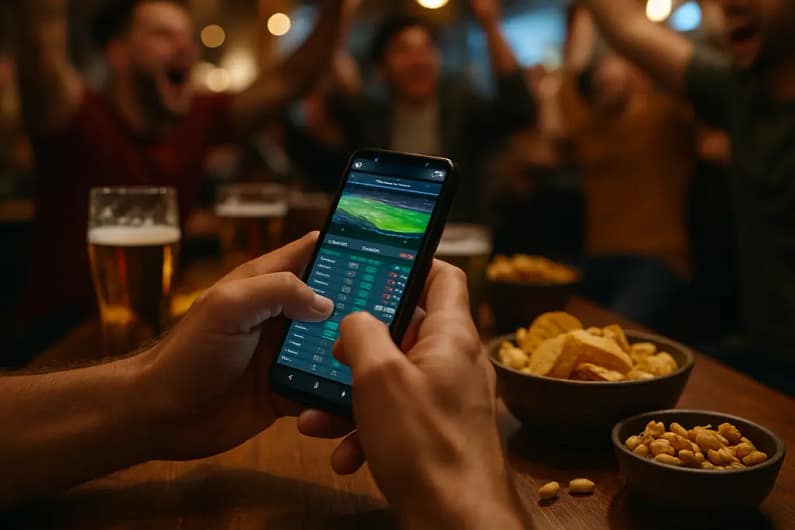
Event-Driven Demand has already been visible in the 2026 NFL season, especially around the opening week and the surge of activity in prediction-market contracts. As of October 2, 2026, the most useful betting-strategy question is not which side to take. It is whether market traffic, media attention, and app behavior are changing the price discovery process before a bettor acts.
That distinction matters because demand spikes can look like information, even when they are partly social behavior. The NFL compresses attention into fixed calendar moments: schedule release, Week 1, primetime windows, rivalry games, playoff rounds, and the Super Bowl. A bettor who treats every spike as a signal risks paying an inflated price. A bettor who treats every spike as noise may ignore genuine liquidity, broader market depth, or faster correction.
No current operator odds are listed here because this analysis is about handle, participation, and market structure rather than a specific line. Any NFL odds or prices available at sportsbooks can move before kickoff, and any comparison should use operator-attributed prices at the time of review.
What Event-Driven Demand Shows In NFL Betting
Event-Driven Demand And Participation Spikes
Event-Driven Demand is a useful frame because NFL betting is not evenly distributed across the calendar. A routine midweek market and a nationally discussed football window do not behave the same way. More people open apps, more casual bettors enter the market, and more attention lands on the same few games. That can create liquidity, but it can also create crowding.
The American Gaming Association estimated legal NFL wagering handle for the 2026 season at $29.5 billion in regulated commercial sportsbooks, flat compared with 2025, according to its AGA estimate. Flat projected sportsbook handle does not mean the NFL is losing betting attention. It suggests attention may be shifting across channels, products, and jurisdictions, which changes how bettors should read market movement.
Handle Is Not The Same As Intent
Handle is often treated as a clean measure of market conviction. It is not. A higher handle can reflect more users, larger average wagers, more promotional activity, or more ways to express the same view through props, live markets, and related contracts. For betting strategy, the question is whether higher volume improves the available price or simply makes popular outcomes more expensive.
This is where bettor psychology becomes practical. NFL events are social. A primetime game can feel more meaningful because more people are discussing it. A Week 1 opinion can feel sharper because everyone has waited through the offseason. Those feelings may be real, but they are not pricing models. The disciplined bettor separates schedule-driven attention from injury news, depth-chart changes, market limits, and verified price movement.
Week 1 Prediction Markets And Legal Sportsbooks
Trading Volume Was A Clear Opening Signal
Week 1 gave the clearest early-season example of attention moving beyond standard sportsbook channels. Action Network reported that Kalshi saw $2.426 billion on Saturday and a new daily record of $2.433 billion on Sunday during the September 9-15 opening-week period, with much of the activity tied to NFL contracts and multi-leg combo contracts, according to Action Network reporting.
That does not make prediction markets the same as regulated sportsbook betting. The products, rules, settlement mechanics, and regulatory questions differ. Still, the behavioral signal is relevant: football attention can create large bursts of activity in markets adjacent to traditional betting. For analysts, that raises a sharper question: are sportsbook prices moving because of football information, or because demand is swelling across every channel where users can express an NFL view?
Why Channel Mix Changes The Read
A sportsbook handle estimate and a prediction-market trading-volume figure measure different systems. One is tied to regulated sports wagering, while the other reflects contract trading. Treating them as interchangeable would be sloppy. Treating them as unrelated would also miss the bettor’s real experience: the same user may be comparing spreads, totals, props, futures, and contracts around the same game or team narrative.
For readers who track handle patterns across major football dates, the site’s related analysis on sportsbook-handle spikes fits the same concern: demand can rise because an event is prominent, not because a price is efficient. That is a subtle but costly distinction. Many poor wagers start with a correct observation about public attention and then make the wrong leap into price confidence.
Market Comparison Without Chasing Noise

Price Checks And Bankroll Friction
Market comparison should become stricter, not looser, during major NFL windows. More attention means more temptation to act quickly. That is especially true in mobile environments where odds screens, bet slips, and promotional prompts compress the decision into seconds. A bettor with a pre-set process is less vulnerable to impulse than one reacting to a broadcast mention or group chat.
A practical comparison routine can stay simple:
- Confirm the market type first: spread, total, moneyline, prop, future, live market, or contract.
- Check whether the price is current at a regulated operator or a clearly defined trading venue.
- Record the time, quoted price, and market conditions before acting.
- Decide stake size before opening the bet slip, not after seeing the payout display.
- Avoid treating high activity as proof that the crowd is informed.
For cost-aware bettors, understanding how small differences in price can add up is crucial, and resources like low-juice sportsbook context offer guidance on why these nuances matter over time. The focus isn’t on chasing every fractional price shift, but rather recognizing that high-profile events may obscure these small discrepancies as attention is drawn to the game.
Regulated Access And Product Boundaries
Jurisdiction matters. A bettor in one state may have access to regulated sportsbooks that another bettor cannot use. Prediction-market access may follow a different rule set. Offshore books introduce different counterparty, withdrawal, and consumer-protection questions. None of those differences should be blurred just because the underlying event is the same NFL game.
This is where caution protects both bankroll and analysis quality. If a bettor compares a sportsbook line with a contract price, the comparison needs to account for fees, settlement terms, market depth, timing, and legal availability. A number that looks attractive on the surface may be less useful once those frictions are included.
Event-Driven Demand Discipline For 2026 NFL Markets
A Better Lens For The Rest Of The Season
Event-Driven Demand should be treated as a market condition, not a betting system. It can explain why activity rises around NFL moments, but it does not identify value by itself. The bettor still needs a price, a reason that price may be wrong, and a plan for what happens if the market moves against the position.
Through October 2, 2026, the evidence supports a cautious reading: legal sportsbook handle was projected to remain flat year over year by the AGA, while Week 1 prediction-market trading produced unusually large reported volume. That combination points to a fragmented attention cycle. NFL interest remains powerful, but it may be spreading across more products than a traditional handle chart captures.
The more disciplined approach is to slow the decision down during the loudest weeks. Ask what changed, who is setting the price, where the liquidity sits, and whether the market is reacting to verified information or simply to the event itself. In 2026 NFL markets, the edge is often not in having a louder opinion. It is in knowing when demand is shaping the number before the football does.