
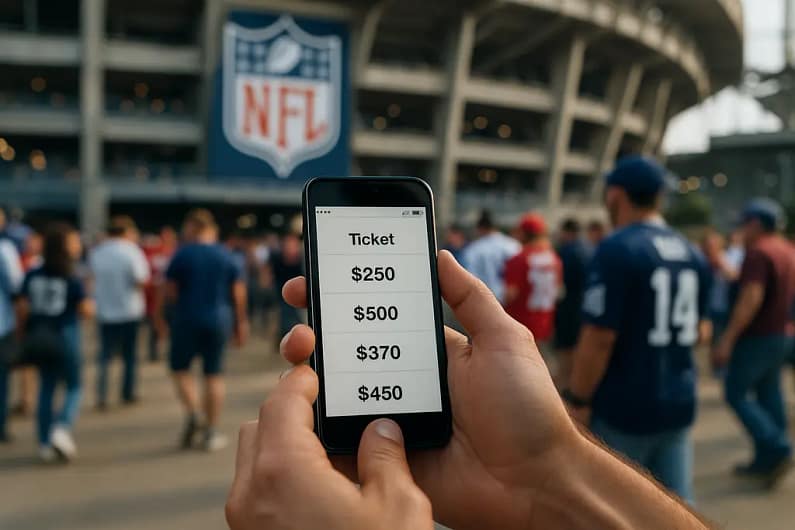
NFL Opener Pricing is a clean way to study how anticipation, scarcity, and public attention can change consumer behavior before the first regular-season games. As of September 8, 2026, the 2026 Week 1 games referenced in the research had already been played or priced in the completed opening-week cycle, so this is a retrospective market read rather than a betting preview.
For bettors, ticket demand is not a prediction model. A sold-out building or an expensive secondary market does not tell us which side will cover, whether a total is efficient, or whether a prop price is fair. It does, however, show where emotion is concentrated. I treat that as useful context: not because crowd enthusiasm wins wagers, but because public attention can affect how media narratives, sportsbook menus, and late-week decision-making feel to the average customer.
The available evidence from Week 1 2026 points to strong opener demand. A published Week 1 ticket-price review reported that only 3 of the 16 regular-season openers had get-in prices below $150, and that the cheapest available tickets averaged about $174 across the full Week 1 schedule Week 1 ticket-price review. That kind of pricing pressure matters because it reflects more than football evaluation. It reflects urgency, identity, novelty, and the fear of missing the first major communal moment of the season.
NFL Opener Pricing Signals In 2026
NFL Opener Pricing And The Scarcity Cue
NFL Opener Pricing often starts with a psychological shortcut: if access feels limited, value feels higher. Season openers arrive after months without regular-season NFL games, so fans are not merely buying a seat. They are buying return, ritual, and status. That does not mean every price is rational in a long-term economic sense. It means the customer is weighing emotion alongside utility.
That distinction matters for anyone comparing betting markets. A bettor who sees an expensive ticket environment may assume the home team has a special edge because the building will be loud. Sometimes crowd conditions matter, but the betting market usually understands home field, travel, rest, and public attention far earlier than casual bettors do. The disciplined move is to separate atmosphere from price. Ticket strength can tell us where demand is hot; it cannot, on its own, tell us whether a sportsbook spread, total, or derivative market is mispriced.
Why Opening Week Can Stretch Perceived Value
Opening week creates a rare blend of uncertainty and confidence. Fans feel they have new information from the offseason, but much of that information has not yet been tested in a regular-season setting. Bettors can fall into the same trap. A coaching change, a highly discussed quarterback, or a marquee rematch may make a market feel more knowable than it is. That feeling can lead to rushed comparisons and shallow price checks.
This is where I prefer a slower process. If no current operator-attributed odds are available in the research, there is no responsible basis to quote a spread, moneyline, total, or player prop here. Prices move before kickoff, and stale numbers are worse than no numbers. The same caution applies to sportsbook menus: market depth is useful only if it is paired with a record of the actual number, the operator, the timestamp, and the house rules that govern settlement.
Consumer Demand And Matchup Premiums
Novelty Versus Familiarity
Demand does not rise evenly across all games. Research on NFL secondary ticket pricing has found that non-divisional games commanded higher prices than divisional games after controlling for factors such as away-team winning percentage and time since the visiting team’s last stadium visit; the model explained about 49% of pricing variance secondary ticket market study. That finding is useful because it challenges a common assumption. Rivalry is not the only premium. Novelty can be powerful, too.
From a psychology angle, unfamiliar opponents can make the event feel less routine. A divisional game may be competitively significant, but fans may have seen that matchup many times. A rarer opponent can create a different kind of demand: one driven by limited opportunity. For NFL Opener Pricing, that effect can be amplified because the first week already carries a fresh-start premium.
Public Attention Is Not The Same As Market Value
Bettors often overread public attention. A game that costs more to attend may draw more conversation, more pregame content, and more social pressure. That can make a side or player prop feel obvious. But obvious is not the same as valuable. Sportsbooks price against expected demand and risk, and bettors need to compare markets across operators rather than react to the loudest matchup.
A practical comparison process starts with three questions. First, is the market deep enough to compare across more than one regulated operator in the bettor’s jurisdiction? Second, are the listed prices tied to the same rules, such as overtime inclusion or player participation requirements? Third, has the number moved because of new information, or because public demand is gathering around a familiar story?
For readers who track Week 1 movement across books, this same discipline applies: compare the market before forming a strong opinion. A broader market-comparison habit is also useful outside football, and resources such as the market comparison notes can help keep the focus on price rather than impulse.
Betting Discipline Around Opening Games

How Emotion Enters The Decision
The first week of an NFL regular season is one of the easiest times to confuse excitement with information. The bettor remembers last season, reacts to offseason coverage, and wants immediate confirmation that their read was correct. That urge can create overconfidence. The market does not need every bettor to be irrational; it only needs enough bettors to accept a weaker number because they want action on a game that feels culturally important.
This is why I treat NFL Opener Pricing as a warning light rather than a green light. High ticket demand can identify games where fan emotion is intense. It can also identify situations where bettors may accept poorer prices because they want to be involved. The most useful response is not to fade the public automatically. Automatic contrarian thinking is just another shortcut. The better response is to slow down and document the market.
- Record the operator, market type, price, and time checked before making any comparison.
- Separate ticket-demand signals from football inputs such as injuries, rest, travel, and matchup data.
- Avoid using crowd buzz as a substitute for current, operator-sourced pricing.
- Set a stake limit before reviewing marquee games so the event does not set the budget.
Why Market Depth Matters More Than Noise
Market depth is especially relevant during opening games because sportsbooks may offer a wider menu around high-attention matchups. More props and live options can look appealing, but variety can increase decision fatigue. A disciplined bettor does not need to have an opinion on every listed market. In fact, the opener environment rewards selectivity because the volume of narratives is so high.
Live betting adds another layer. The first quarter of an opener can create dramatic emotional swings because every play feels like evidence. A poor opening drive may confirm a preseason worry; an early touchdown may make an offseason narrative feel true. Yet the live market also moves quickly, often faster than a bettor can calmly assess whether the new price is fair. Without current operator data, the only responsible advice is process-based: define what information would justify a live decision before the game starts, and avoid chasing a reaction after the market has already adjusted.
Season-Opener Demand And Pricing Differences
The main lesson from 2026 Week 1 is that opener demand was visible in ticket prices, but ticket prices should not be mistaken for betting value. Only 3 of 16 openers below a $150 get-in price and an average cheapest ticket near $174 point to broad consumer willingness to pay for the first NFL week. That tells us the product is emotionally charged. It does not tell us which sportsbook number is correct.
NFL Opener Pricing is most useful when it is treated as context for behavior. It helps explain why casual bettors may gravitate toward certain games, why high-profile matchups feel urgent, and why a bettor needs more discipline during opening week than during a quieter part of the schedule. The edge is not in assuming the crowd is wrong. It is in refusing to let the crowd set your process.
For a cautious bettor, the answer is simple but not easy: compare regulated operators available in your jurisdiction, avoid offshore or rule-avoidance shortcuts, track every number you rely on, and be willing to pass when the price is unclear. Opening games are built to attract attention. Your job is to decide whether the market price, not the event itself, deserves yours.