
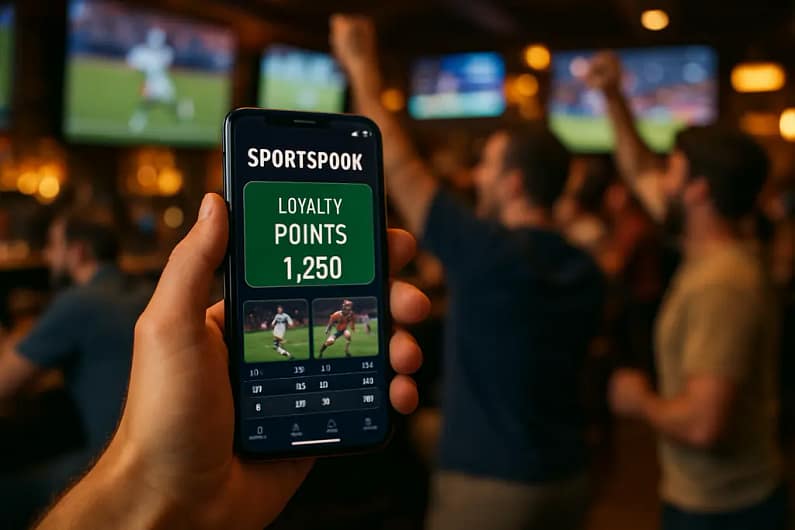
Sportsbook Loyalty Programs have moved from a side feature to a central retention tool as U.S. operators react to state tax pressure, responsible-gaming rules, and scrutiny of VIP treatment. For bettors, the practical question is not whether a reward looks generous on screen. The question is whether the reward changes the real cost of betting, limits price comparison, or encourages volume that would not fit a pre-set staking plan.
The research record points to a clear shift in 2026: sportsbooks were testing multi-day bet matches, bet-reset tokens, loyalty currencies, tier systems, and promotions spread across several wagers rather than one large welcome offer. That does not automatically make rewards worse or better. It makes them harder to evaluate. A bettor now needs to measure value across time, jurisdiction, market type, and behavioral risk.
How Sportsbook Loyalty Programs Are Changing
From One-Time Bonuses To Tiered Rewards
Industry reporting in July 2026 described U.S. sportsbooks moving away from broad free-bet offers and toward structured loyalty models that resemble casino comp systems. The reason is partly economic. A single up-front promotion can be expensive if it creates many small wagers in a state where each wager carries a direct tax cost. A tiered system gives the operator more control: rewards can be released slowly, tied to activity bands, or converted into site currency with specific redemption terms.
That shift changes the bettor’s job. A one-time bonus can usually be evaluated with a simple checklist: eligible markets, minimum odds, expiration date, withdrawal rule, and rollover condition. A tier program requires a longer record. The bettor has to track how points are earned, which bet types qualify, whether rewards expire, and whether the program nudges action into higher-hold areas such as same-game parlays or niche props. Without a tracking sheet, the headline value can look cleaner than the realized value.
Sportsbook Loyalty Programs As A Cost Tool
Sportsbook Loyalty Programs can also act as a pricing tool for the operator. A reward may reduce the visible friction of staying with one book, even if another regulated book posts a better price on the same market. That matters because the cost of loyalty often shows up quietly through missed price improvement rather than a posted fee. For a related discussion of this issue, see the site’s analysis of sportsbook loyalty cost.
The disciplined response is not to reject every reward. It is to separate reward value from market value. A bettor evaluating an NFL spread, NBA total, tennis moneyline, or player prop should first compare the market price across available regulated operators. Only after that comparison should the loyalty credit be applied to the decision. If the reward is the only reason to place a wager, that is a warning sign rather than a signal.
Regulation Is Repricing Rewards
Illinois Shows The Per-Wager Pressure
Illinois is a useful example because the research record identifies a specific per-wager cost. In 2024, the state imposed a tax on Internet and mobile sports wagers: 25 cents per wager on the first 20 million annual wagers and 50 cents per wager beyond that threshold, as reflected in the state’s Sports Wagering Act. That type of tax can make high-volume, low-stake promotional play less attractive for operators to subsidize.
For bettors, the key takeaway is structural. A promotion that once rewarded frequent small bets may be reworked into a format that spreads credits across days, requires larger qualifying wagers, or rewards longer-term account activity. This is not a prediction about any one operator’s future menu. It is a market design issue: if each wager has a fixed cost, operators have an incentive to reduce bonus structures that create many low-margin tickets.
Federal Proposals Add VIP Risk
The SAFE Bet Act, introduced in March 2025 according to the supplied research, proposed restrictions that would directly affect VIP and tier programs. The bill text included a proposed ban on VIP programs and limits that would prohibit rewards of more than $5 tied to customer level, amount, frequency, or rate of gambling activity, as shown in the SAFE Bet Act text. As a bettor resource issue, that proposal is useful even before discussing enactment because it shows where policy attention has been aimed.
Regulators are not only looking at whether promotions are clear. They are looking at whether promotions reward intensity. That distinction is central to loyalty design. A monthly profit boost, merchandise credit, or site currency grant may be less sensitive than a host-driven VIP model that rewards high deposit frequency. Bettors should read the terms with that lens: does the program reward ordinary engagement, or does it push more frequent betting?
Tools For Comparing Reward Value
Build A Reward Ledger Before You Chase Status
A practical reward ledger can be simple. It should record the date, operator, qualifying wager, stake, market type, reward earned, expiration date, and estimated cash value after restrictions. That last column is where many bettors find the gap between advertised value and usable value. A $25 token that can only be used on narrow markets with a short deadline is not the same as $25 in withdrawable cash.
For bettors who use several education and comparison resources, 1×2 Betting Pro serves as a valuable site within the same network, complementing a structured recordkeeping process. The choice of resource matters less than the habit: compare prices first, record rewards second, and review behavior third.
- Record the pre-reward price available at more than one regulated operator.
- Assign a realistic value to tokens, credits, boosts, and site currency after restrictions.
- Track whether rewards are steering wagers into markets you would normally skip.
- Review monthly whether loyalty value exceeded the cost of weaker prices.
Compare Market Depth, Not Just Perks
Sportsbook Loyalty Programs may look strongest during high-demand events because operators have more ways to package rewards around major games. But market depth still matters more than decoration. A book with wide prop menus, active live markets, and many alternate lines may be useful for comparison, yet those same markets can also carry higher holds. The bettor’s task is to compare price, liquidity, and rules before assigning any value to points or tier status.
This is especially relevant for live betting. A loyalty token tied to in-play action may create pressure to act before the market settles. If latency, suspension frequency, or cash-out rules are unclear, the reward can become a distraction. The cleaner process is to decide in advance which event types and market types are acceptable, then ignore offers that fall outside that plan.
Responsible Use Of Loyalty Data

Promotions Should Not Set The Betting Schedule
The research record also described state-level attention to direct marketing, push notifications, deposit behavior, and personalized promotions. Colorado legislation signed on June 2, 2026, was reported as placing new guardrails around credit-card use, deposit frequency within 24 hours, and push notifications. New York consultation activity in 2026 was reported as focusing on artificial intelligence in personalized promotions and restrictions around at-risk patrons. Those examples point in the same direction: re-engagement tools are under review because they can affect behavior.
The bettor can respond with self-imposed controls. Turn off nonessential notifications where available. Set deposit and time limits before evaluating rewards. Keep a cooling-off rule for any offer with an expiration clock. If a loyalty program makes a bettor feel rushed, the program is shaping the session rather than rewarding an already-planned decision.
Separate Status From Discipline
Status is a powerful psychological device. Tier labels, progress bars, badges, and host messages can make ordinary betting feel like a goal-based program. That is useful for retention, but it can be risky for bankroll discipline. A bettor should treat status as a non-cash feature unless the reward can be converted into a measurable, rules-compliant value without increasing volume.
A disciplined review asks three questions. Did the reward improve the price on a wager that already fit the plan? Did it require extra stake or extra frequency? Did it reduce comparison across regulated books? If the answer to the second or third question is yes, the reward needs a haircut in the ledger. The real value may be far lower than the advertised value.
Sportsbook Loyalty Programs Under New Rules
Sportsbook Loyalty Programs are best viewed as changing market infrastructure, not as gifts. Operators have tax, retention, and compliance reasons to reshape bonuses into longer-running reward systems. Bettors have equally practical reasons to slow down and price those systems with care.
The strongest adaptation is procedural: compare regulated market prices, value rewards conservatively, avoid volume chasing, and keep responsible-gaming controls active. Sportsbook Loyalty Programs can have legitimate utility when they reduce the cost of wagers a bettor already planned to evaluate. They become weaker when they replace price shopping, compress decision time, or encourage action for status alone.