

Most bettors look at odds and see a number. The sharp move is to see a percentage. That’s the bottom line. If you can turn odds into implied probability, you can judge whether a price is fair, overpriced, or worth a shot before your money ever hits the book. Miss that step, and you’re betting blind, guessing off vibes, recent highlights, or the false comfort of a favorite that looks “safe” but carries a bad price.
That’s where a lot of bankrolls get chipped away, one ordinary-looking wager at a time, and the damage sneaks up on you since a few wins can mask weak decisions for weeks, which is why implied probability matters so much: it gives you a clean way to slow down, translate the line, and ask the only question that counts does this number make sense? Once you can answer that, you stop chasing flashy payouts and start making calmer, smarter bets. Over time, that shift in thinking compounds. You’re no longer reacting to games you’re evaluating prices. That’s the difference between casual betting and a disciplined approach.
What Is Implied Probability in Sports Betting?
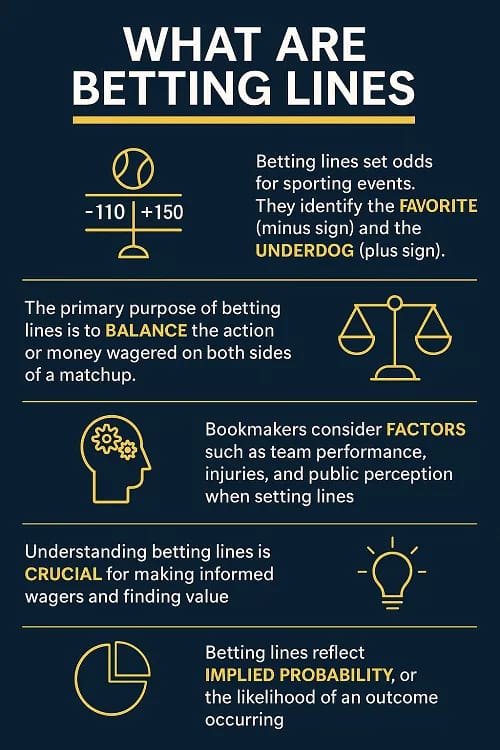
Implied probability in sports betting is the percentage chance of an outcome based on the odds posted by the sportsbook.
That’s it.
A sportsbook hangs a price on Team A, Team B, a moneyline, a prop, or a total. That price tells you what the book is paying. It quietly tells you something else, too: how likely the book says that outcome is to happen.
Think of odds like a foreign language. You already know the symbols +150, -200, 2.50, 5/2 but implied probability translates that language into plain English. Suddenly, +150 is no longer just a possible payout. It becomes a claim: this team has about a 40% chance to win.
That shift matters.
Once you convert betting odds to probability, you can compare lines across sportsbooks, judge whether a bet offers value, spot overpriced favorites, see through flashy underdog payouts, and make decisions with logic instead of impulse. Tools like an implied probability calculator can speed this up, though understanding the math yourself gives you a stronger edge.
So, what’s the bottom line? Odds are price tags. Implied probability tells you what those price tags are saying.
Why Implied Probability Matters
A lot of bettors skip this step and go straight to the fun part. They like the matchup. They like the team. They like the payout. Bet placed.
That’s how money leaks out of your stack.
Implied probability betting matters since it forces you to frame every wager the right way. You stop asking, Can this team win? Of course they can. Underdogs win all the time. The better question is, How often do they need to win for this bet to make sense?
That one shift can clean up your whole approach.
Here’s what implied probability helps you do:
- Compare prices fast. One book may offer +140. Another may offer +155. Small gap, right? Not really. That price difference changes the break-even point.
- Find value bets. If your read says a team wins 45% of the time and the line implies 40%, you may have an edge.
- Avoid bad favorite bets. Bettors often lay ugly prices on teams they trust. Trust doesn’t pay the vig.
- Build discipline. Percentages pull you away from emotion and back toward process.
Picture a bettor backing a -220 favorite just since “they should win.” That team may win the game, sure, though the question is whether they win often enough to justify that price over the long haul. That’s the trap. Good picks can still be bad bets. Over hundreds of wagers, those small inefficiencies stack up and quietly drain your bankroll.
How to Calculate Implied Probability From Odds
The math is easier than it sounds. You do not need to be a spreadsheet wizard. You just need the right formula for the odds format in front of you.
| Odds Format | Formula | Example | Result |
|---|---|---|---|
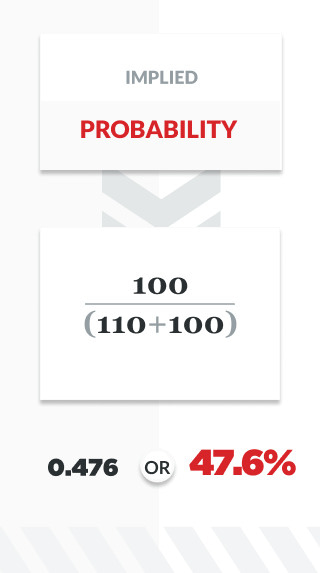
| American odds formula, for positive American odds | Implied Probability = 100 / (Odds + 100) | Example: +150. 100 / (150 + 100) = 100 / 250 | 0.40 = 40% |
| American odds formula, for negative American odds | Implied Probability = Odds / (Odds + 100). Use the absolute value of the odds. | Example: -200. 200 / (200 + 100) = 200 / 300 | 0.6667 = 66.67% |
| Decimal odds formula, for decimal odds | Implied Probability = 1 / Decimal Odds | Example: 2.50. 1 / 2.50 | 0.40 = 40% |
| Fractional odds formula, for fractional odds | Implied Probability = Denominator / (Numerator + Denominator) | Example: 5/2. 2 / (5 + 2) = 2 / 7 | 0.2857 = 28.57% |
That’s the core of the implied probability formula in betting. No mystery. Just convert the number into a percentage and you have a much better grip on what the sportsbook is offering. If you don’t want to calculate manually every time, you can use a betting odds converter to move between formats quickly.
Implied Probability Examples for Beginners
Let’s make this real.
| Example | Scenario | Implied Probability | What it means |
|---|---|---|---|
| Example 1: +150 | You’re looking at an NBA underdog priced at +150. | The implied probability is 40%. | What does that mean in plain language? The sportsbook is saying this team wins about 4 out of 10 times. If you think they win 5 out of 10, or 45 out of 100, the bet may be worth a look. |
| Example 2: -200 | A heavily favored NFL team is listed at -200. | The implied probability is 66.67%. | That sounds strong, and it is, though the payout is thinner. The book is telling you this team needs to win about two-thirds of the time just to justify the price. If your own read lands closer to 60%, that favorite may be overpriced. |
| Example 3: 2.50 Decimal Odds | A tennis player is sitting at 2.50 in decimal odds. | That converts to 40% implied probability. | Same meaning as +150. Different format. |
| Example 4: 5/2 Fractional Odds | A horse is listed at 5/2. | That converts to 28.57% implied probability. | The market is saying this outcome hits a bit less than 3 times in 10. |
Sounds simple, right? Here’s the catch: bettors often stare at the payout and forget the threshold. A bigger return grabs your attention. Implied probability keeps your eyes on the real question—how often does this need to win?
Implied Probability vs True Probability
This is where things get interesting.
Implied probability is the sportsbook’s number, baked into the odds.
True probability is your estimate of how often the outcome should happen.
Those two numbers are rarely identical.
Let’s say a baseball team is priced at +150, which implies a 40% chance to win. After looking at pitching matchup, bullpen rest, lineup splits, travel, and weather, you think that team wins 46% of the time.
That gap matters.
If your number is higher than the sportsbook’s implied number, you may have value. If your number is lower, pass.
Think of it like shopping for a TV. The store says it’s worth $800. You’ve done your homework and think fair value is $650. You walk. Same idea in betting. Odds are prices. Your job is to decide whether the price is cheap, fair, or inflated.
How to Spot Value Bets
Value betting starts with one rule:
If your estimated probability is higher than the sportsbook’s implied probability, you may have a profitable bet.
Let’s use a simple example.
A sportsbook posts an MLB underdog at +170.
That converts to:
100 / (170 + 100) = 37.04%
Now let’s say you handicap the game and land at 42%.
| Comparison | Percentage |
|---|---|
| Your number | 42% |
| Sportsbook number | 37.04% |
That difference is your possible edge.
This does not mean the bet wins tonight. That’s not the point. A value bet can lose. A bad bet can win. The goal is to make prices work in your favor over a long sample. Consistency here is what separates profitable bettors from those stuck in cycles of ups and downs.
What the Vig Does to Sportsbook Odds
Sportsbooks are not posting perfectly fair odds. They’re building in a fee.
That fee is called the vig, juice, or overround.
| Side | Odds | Implied probability |
|---|---|---|
| Team A | -110 | 52.38% implied probability |
| Team B | -110 | 52.38% implied probability |
| Calculation | Result |
|---|---|
| 52.38% + 52.38% | 104.76% |
That total should be 100% in a fair market. It isn’t. The extra 4.76% is the book’s margin.
How to Remove the Vig
| Item | Value |
|---|---|
| Each side has an implied probability of | 52.38% |
| Total | 104.76% |
| To remove the vig, divide each side’s implied probability by the total | 52.38 / 104.76 = 50% |
Now you’ve got a fairer estimate. This process is essential if you’re trying to model games or compare your projections against the market accurately.
Common Implied Probability Mistakes
| Number | Mistake | Explanation |
|---|---|---|
| 1 | Confusing payout with value. | A +200 underdog looks exciting. That doesn’t make it a good bet. Big return does not mean good price. |
| 2 | Treating favorites like safe investments. | Favorites win more often. The hard part is whether the number is worth paying. |
| 3 | Ignoring the sportsbook margin. | If you forget the vig, your read gets distorted. |
| 4 | Failing to line shop. | One extra click can save your bankroll. |
| 5 | Betting off gut feel. | Emotion without price discipline costs money. |
| 6 | Tracking wins instead of price quality. | Results don’t always reflect good decisions. |
How to Use Implied Probability Every Day
| Action | Why it helps |
|---|---|
| Convert odds into percentages before betting. | It shows the break-even point. |
| Check multiple books before locking in a play. | Better prices create edge. |
| Write down your own estimate first. | Keeps you unbiased. |
| Track the number you got, not just the result. | Price matters more than outcome. |
| Pass on bets that don’t show value. | Protects your bankroll.\ |
Responsible Betting: Stay Disciplined
Implied probability does more than sharpen your reads. It can calm you down.
When you think in percentages, you’re less likely to fire at random spots, chase losses, or bet bigger since a team “can’t lose.” That mindset protects your dough.
Here’s rule number one: set a budget.
Then pair that budget with probability thinking. Bet with a plan. Respect price. Respect variance. Accept that good bets lose and bad bets win in the short run. If you need structure, consider using a bankroll management guide to stay consistent.
Final Takeaway
Implied probability is one of the clearest tools in sports betting. It turns odds into something useful. It helps you compare books, spot bad prices, find value, and avoid emotional bets that chew through your funds.
Master this and every market starts to look different.
You won’t see just numbers anymore. You’ll see break-even points, margin, value, and risk.
That’s a real edge.
FAQs
| Question | Answer |
|---|---|
| What does implied probability mean in betting odds? | It means the percentage chance of an outcome based on the odds posted by the sportsbook. |
| How do you calculate implied probability? | Use formulas based on odds format like American, decimal, or fractional. |
| What is the difference between implied and true probability? | Implied comes from odds. True is your estimate. |
| Why does implied probability matter? | It helps you find value and avoid bad bets. |
| How do you find value bets? | Compare your probability vs sportsbook probability. |