
Finding an edge in sports betting can be tough. People often look at teams, stats, and their gut. But the real advantage lies in the market’s clock.
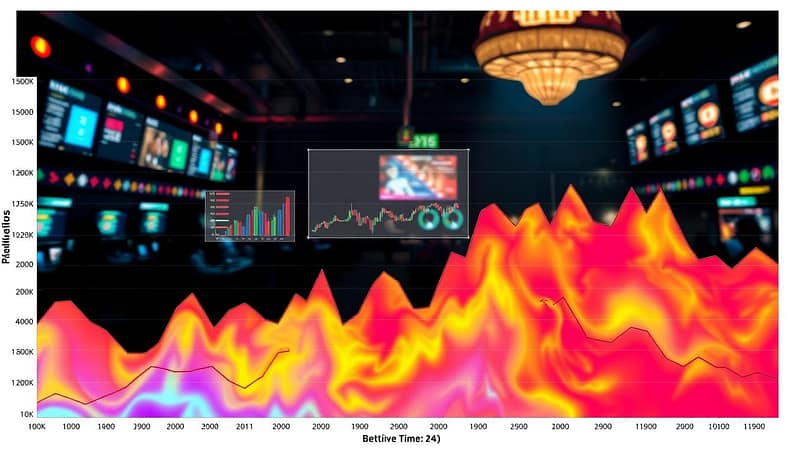
Imagine a financial market heatmap. It shows more than just prices. It reveals the flow of money, the liquidity.
In betting, liquidity is about the money on each side of a bet. Knowing when this money is most active is key. It helps you find value before or after others bet.
This article teaches you to be strategic, not just a gambler. You aim to understand the market’s flow like a map. Edges change and peak at certain times.
Learning this rhythm sets pros apart from casual bettors. It’s about knowing when to bet for the best chance to win.
Know the clock you’re betting on
The betting line’s life starts with a key price from a special group of books. This first price, called the “opener,” is the market’s first beat. To bet well, you need to match your timing with these originators.
Market maker books are these originators. Companies like Pinnacle and Cris are examples. They aim to set fair prices, not just follow public opinion. Their opener is like a financial trading “order block,” setting the stage for supply and demand.
After the opener, other books react. They might copy or adjust the line. This creates a flow of money, like a financial “liquidity pool.” Smart money looks for these key areas to make big moves.
Knowing which books lead and which follow is key. Leaders set prices, while followers adjust. A sharp book might lead in niche markets but follow in big NFL games. This knowledge helps you find the best betting signals.
| Book Type | Role in the Market | Primary Action | Example Books |
|---|---|---|---|
| Leader (Price-Setter) | Originates value; sets the opener. | Posts initial lines based on proprietary models. | Pinnacle, Cris, SBOBet |
| Follower – Sharp | Quickly reacts to leader moves; adjusts for value. | Copies or slightly adjusts leader lines within minutes. | Bookmaker, BetOnline |
| Follower – Public/Retail | Prioritizes balancing liability over perfect price. | Reacts slower, often moves lines based on ticket volume. | FanDuel, DraftKings, Caesars |
Timing is everything in betting. Your best time to bet depends on the market makers and the market’s reaction. Before betting, ask who set the line and if they’re a leader or follower. This helps you find your edge.
Which books move first and who copies whom
Spotting the difference between real line moves and fake ones is key to winning. The sports betting world is complex. It’s filled with different operators, each with their own style and information sources.
Some sportsbooks lead the way in price discovery. They have the money and the smarts to set the first numbers. Others follow, adjusting their lines after seeing what the leaders do.
It’s important to know who’s leading and who’s following. If you’re betting after a book that always follows, you’re too late. The real chance to win comes when the first book makes a move.
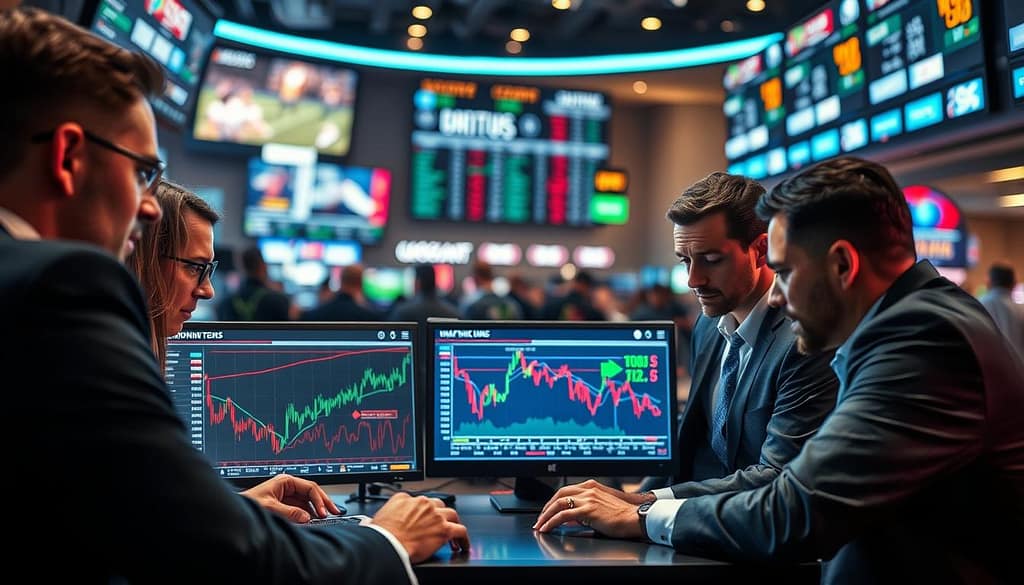
Think of it like financial markets and the concept of spoofing. Spoofing is when someone places big orders to trick others, then cancels them. In sports betting, it’s like a book setting a tempting line to get people to bet, then changing it to their advantage.
This tempting line is like bait. It might be a spread that’s a bit off or a moneyline that’s too good to be true. The goal is to get lots of bets on one side, then adjust the line to make the book even.
It’s important to tell real moves from fake ones. Here are signs of a real move:
- Persistence: The new line stays the same as bets come in. It doesn’t keep changing.
- Source Authority: The move comes from a book known for smart bettors and good models.
- Corroboration: Other top books follow the move in a logical order, not all at once.
- Market Depth: The move is backed by steady betting limits, not just a change in numbers.
Deceptive moves look different. They might be a weird line at a small book, get a lot of attention, attract lots of bets, and then change back. This creates a lot of action without real money.
By figuring out who moves first, you can ignore the fake moves. You learn to spot real changes in the market. This helps you bet smarter and make more money.
This knowledge helps you bet at the right time. It turns you from a passive bettor into an active one. You’re no longer chasing after bad bets; you’re following the real leaders in the market.
Knowing who copies whom helps protect your money. It makes sure your bets are based on real line movement, not fake changes. In the game of timing, knowing who’s behind the moves is half the battle.
Limits schedule by league; what “taking a number” really means
When a sportsbook lets you “take a number,” it’s inviting you into its pool of money. This isn’t just a casual offer. It shows the book’s liquidity and risk level at that moment.
Betting limits vary by league and bet type. Big markets like the NFL or NBA have higher limits. Smaller leagues or unique props have lower caps. This schedule helps the book manage its risk.
Think of a limit as a door. A high limit means the book is open to big bets. A low limit means it’s cautious or short on money. This is where screen watching becomes more than just looking.
“Taking a number” means the book is sure it can match your bet. You get to see their current liquidity. But if limits drop, the book might be in trouble.
Watching limit changes can give you insight. A line moving against you but with high limits means the book is okay with the bet. But if limits drop while moving with you, the book is protecting itself.
Effective screen watching means tracking this data closely. The heatmap shows market depth with great detail. You can see what others are doing by watching limit changes.
To get better, focus on patterns in different leagues. Use the table below to understand typical limit ranges.
| League / Market | Typical Max Limit Tier | Liquidity Characteristic |
|---|---|---|
| NFL / College Football | High ($5k – $50k+) | Deep, liquid, sharp action frequent |
| NBA / MLB | Medium-High ($2k – $20k) | Liquid, but limits can tighten on off-board lines |
| International Soccer (EPL) | Medium ($1k – $10k) | Liquid for main lines, low on props |
| Niche Sports (e.g., Darts, Rugby) | Low ($200 – $1k) | Shallow, limits highly reactive to volume |
| Player Props / Exotics | Very Low ($50 – $500) | Extremely shallow, books quick to reduce exposure |
This schedule isn’t random. It shows the book’s liquidity and trading skills in each sport. Your goal in screen watching is to spot when limits change from the norm. That tells you a lot.
Getting good at this makes you more than just a bettor. You become an analyst, reading limits for strategy. This is key to using limit data for your advantage.
Timing pockets: overnight openers, morning injury dumps, pre‑limit rush, post‑limit sharp moves
Just like day traders switch between charts, bettors need to know their timing pocket. The market for a single game goes through different phases. Each phase has its own liquidity, noise levels, and strategies.
Think of these pockets like trading timeframes. Long-term investors look at daily charts. Swing traders watch 4-hour moves. Scalpers focus on 1-minute changes. Your betting strategy must adapt just as fluidly.
Missing this context can lead to mistakes. You might try to fight public noise with a sharp’s patience, or vice versa. Let’s break down the four key pockets that define a typical betting day.
The Overnight Opener
This is the first line posted after the previous game ends. Liquidity is thin, often set by a single sharp book or model. The line is a pure, theoretical starting point.
Moves here are calculated, not reactive. They are based on early sharp money or model adjustments. This pocket offers high line quality but low immediate opportunity for most. It sets the baseline all other action reacts to.
The Morning Injury Dump
When major news breaks—star player out, coach change—volatility spikes. Books quickly adjust limits down to manage risk. The market reacts in a frantic, news-driven scramble.
Liquidity can be deceptive. Public overreaction creates temporary inefficiencies. The key here is speed and discernment: separating the real line move from the panic noise before limits get hit.
The Pre-Limit Rush
As game time approaches, public money floods in. This is high-volume, often emotional betting. Books widen margins slightly to capture this flow.
Liquidity is high, but the line quality degrades with public bias. Moves are less reliable. This is a pocket for contrarian plays or avoiding popular sides altogether. It’s the “noisiest” period.
The Post-Limit Sharp Move
After a book’s liability limit is reached on a side, they take the bet off the board. When it reopens, the line often jumps. This final adjustment is usually driven by other sharp books or late professional money.
This move is subtle but significant. It reflects the cleanest market consensus after all noise is filtered. Betting against this late move is rarely wise. It’s the market’s final, most informed word.
| Timing Pocket | Typical Window | Key Actors | Liquidity & Noise | Strategic Focus |
|---|---|---|---|---|
| Overnight Opener | Late night to early AM | Sharp books, Models | Low liquidity, Low noise | Establish baseline; Watch for early sharp consensus. |
| Morning Injury Dump | 7 AM – 10 AM ET | Reactive Books, Alert Public | Erratic liquidity, High noise | Quick, news-based value; Fade public panic. |
| Pre-Limit Rush | 2-4 hours before game | General Public, Square Money | High liquidity, Very high noise | Contrarian value; Avoid heavily bet public sides. |
| Post-Limit Sharp Move | 60-90 mins before game | Other Sharps, Late Wise Money | Focused liquidity, Low noise | Confirm final line direction; Respect the move. |
These game-level pockets are further influenced by macro patterns. The most significant is the weekend effect. From Thursday to Sunday, the number of available games explodes.
This volume disperses liquidity and sharp attention. Books have less capital and focus to dedicate to each line. This can create softer lines and slower reactions across the board, even in less prominent games.
Weekend effects mean inefficiencies may linger longer. A sharp move that would correct a line in minutes on a Tuesday might take hours on a Saturday. Holiday slumps operate the same way, with reduced trading staff and altered public behavior.
Your job is to know your timeframe. Are you trading the volatile 1-hour “injury dump” or the steady daily “opener”? Your edge depends on matching your strategy to the correct pocket.
Build a timing diary; CLV attribution to timing not model
Understanding liquidity maps is one thing. Making money from them is another. The key is a personal log called a timing diary.
This isn’t just for tracking bets. A timing diary helps you note when you bet, not just what. For each bet, write down the timing and the limit at that time.
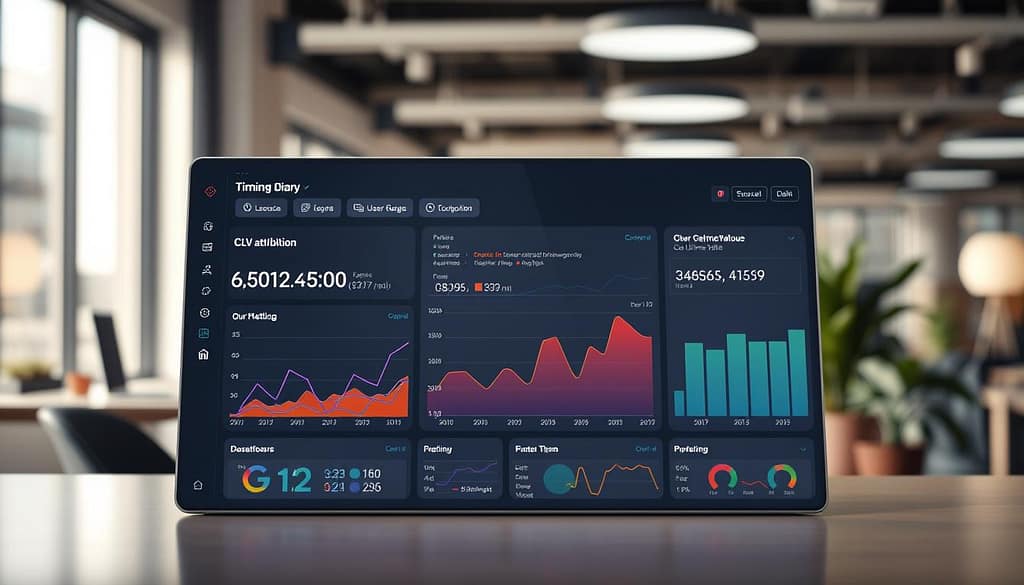
Later, reviewing your closing line value (CLV) is key. Ask if your win was due to a smart model or good timing. This is the heart of CLV attribution.
Bettors often think their model is the reason for wins. But, good timing can make up for a model’s weaknesses. Betting at the right time can add more value than a perfect model.
To check your timing, use a trader’s dashboard. Log important data points:
- Market Context: Was bet placed during major news, pre-game, or overnight?
- Liquidity State: What was the posted limit at the exact time of your wager?
- Post-Bet Movement: How did the line move 30 minutes, 1 hour, and 2 hours after your bet?
- Zone Alignment: Did your bet align with a high “Liq. Heat” or “Volume” zone on your map?
This change from focusing on outcomes to process is huge. By focusing on timing, you aim for repeatable success. You learn to bet when the market favors you.
Weekends/holidays and travel slumps: how they change price quality
Market conditions change on weekends and holidays. Teams and key people have different travel schedules. This creates unique volatility, leading to what traders call “noisy screens.”
Liquidity becomes unpredictable. The sudden flow of updates makes news windows overwhelming. In these news windows, market signals often disagree with each other. This makes any single data point less reliable.
Your ability to see patterns is key here. High-frequency trading research shows this. You can spot the chaos in a heatmap where raw data fails. This visual skill helps you find low-quality price action.
Being disciplined in not acting is a strategic skill. Using only confirmed, non-repainting signals is a good rule. It avoids hindsight bias and requires patience. A simple rule might be: wait one full hour after major news before betting.
Keeping your capital safe during these times is a smart move. It lets you focus and use your funds better later. You act with full force when your liquidity map is clear and your edge is highest.